

-
 3-4 , 5-8 , 9-10
-
 20 to 60 min
-
 Easy
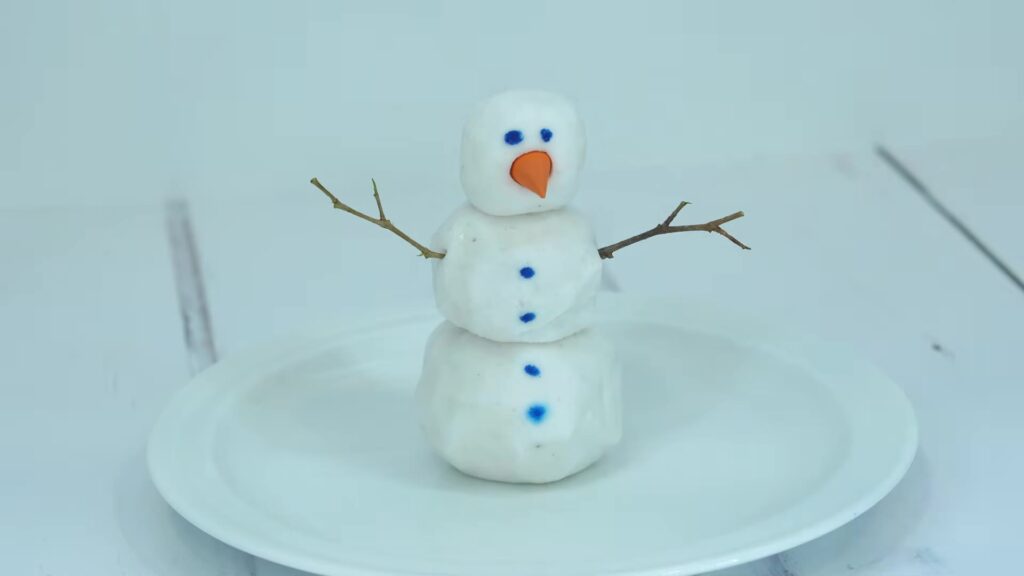
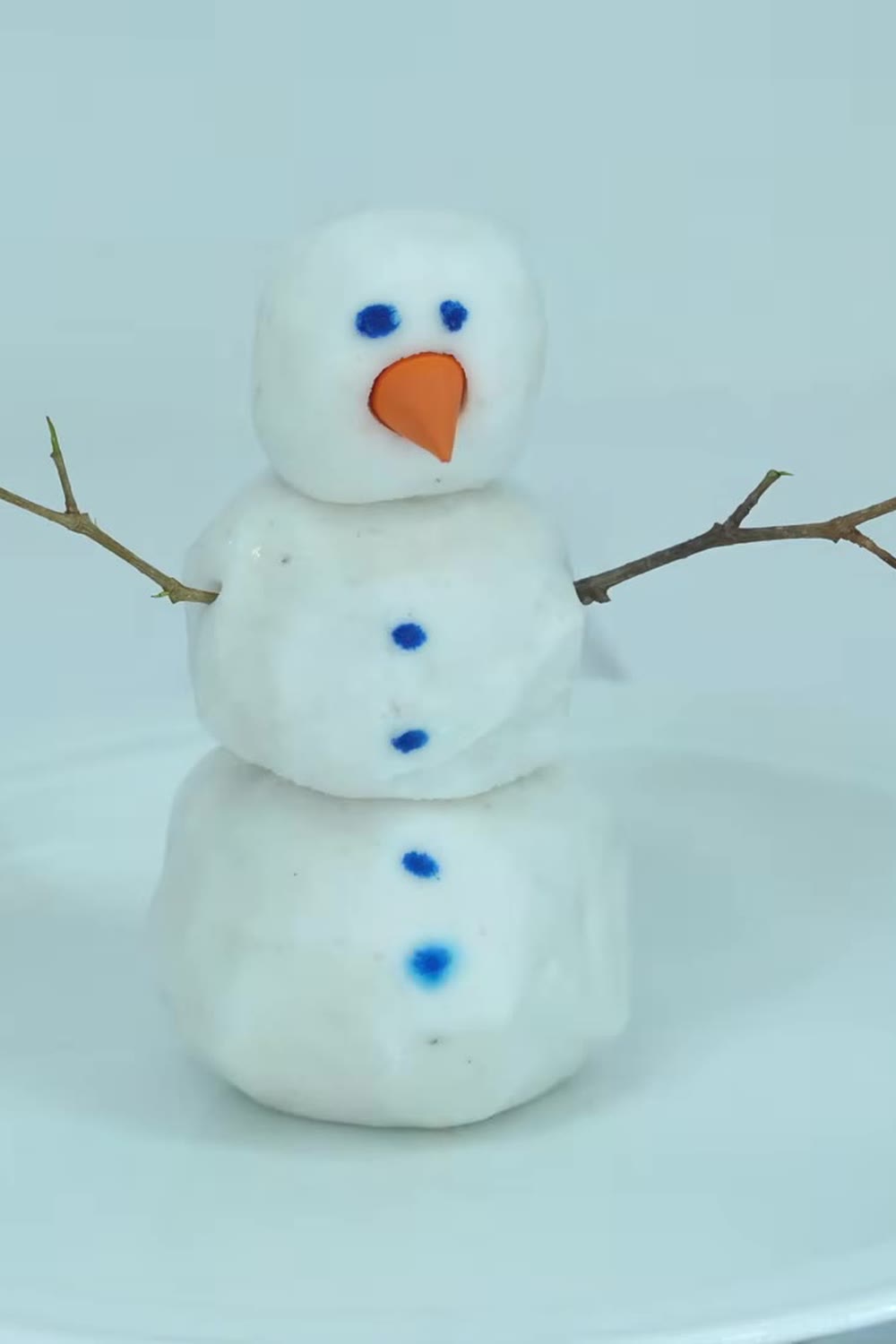
This melting snowman experiment is a little snowman made from baking soda dough that fizzes, foams and slumps into a puddle when you drip vinegar on it. The acid in the vinegar reacts with the baking soda and makes carbon dioxide gas, and the hand wash in the dough traps the gas as snowy foam.
Children mould the snowman, give it a nose, arms and painted buttons, and then get to melt it themselves. It’s a lovely bit of Christmas science for a winter afternoon. You might also see it called an exploding snowman or a baking soda snowman.
List of Materials
Baking soda and bicarbonate of soda are the same thing (sodium bicarbonate), so use whichever your shop calls it. Don’t swap in baking powder: it already contains a dry acid, so it starts fizzing as soon as the water goes in and gives a much weaker show. Any clear white food vinegar works (distilled or spirit); malt vinegar works too but is brown and smells stronger. Avoid “cleaning” vinegar with young children: it can be several times stronger. The hand wash is what turns the fizz into thick foam, so don’t leave it out; washing-up liquid does the same job. No pipette? A teaspoon works, it’s just harder to aim.
This experiment uses everyday kitchen ingredients, but they still need an adult nearby.
- Vinegar stings eyes. Keep pipettes pointing down and away from faces. If a splash gets in an eye, rinse it with plenty of clean water.
- The dough is not food. It is full of soap, salt and baking soda. Toddlers love squishing it, so watch that hands don’t go in mouths, and wash hands afterwards. Keep the dough and the slush away from pets: the salt and baking soda can make dogs ill.
- Twigs can be pokey for little ones: an adult can push them in.
- Mess: the foam spreads further than you’d think. Use a plate with a rim or a tray, and keep paper and fabric away.
Step by Step Instructions
Tip a small glass of baking soda into a mixing bowl.
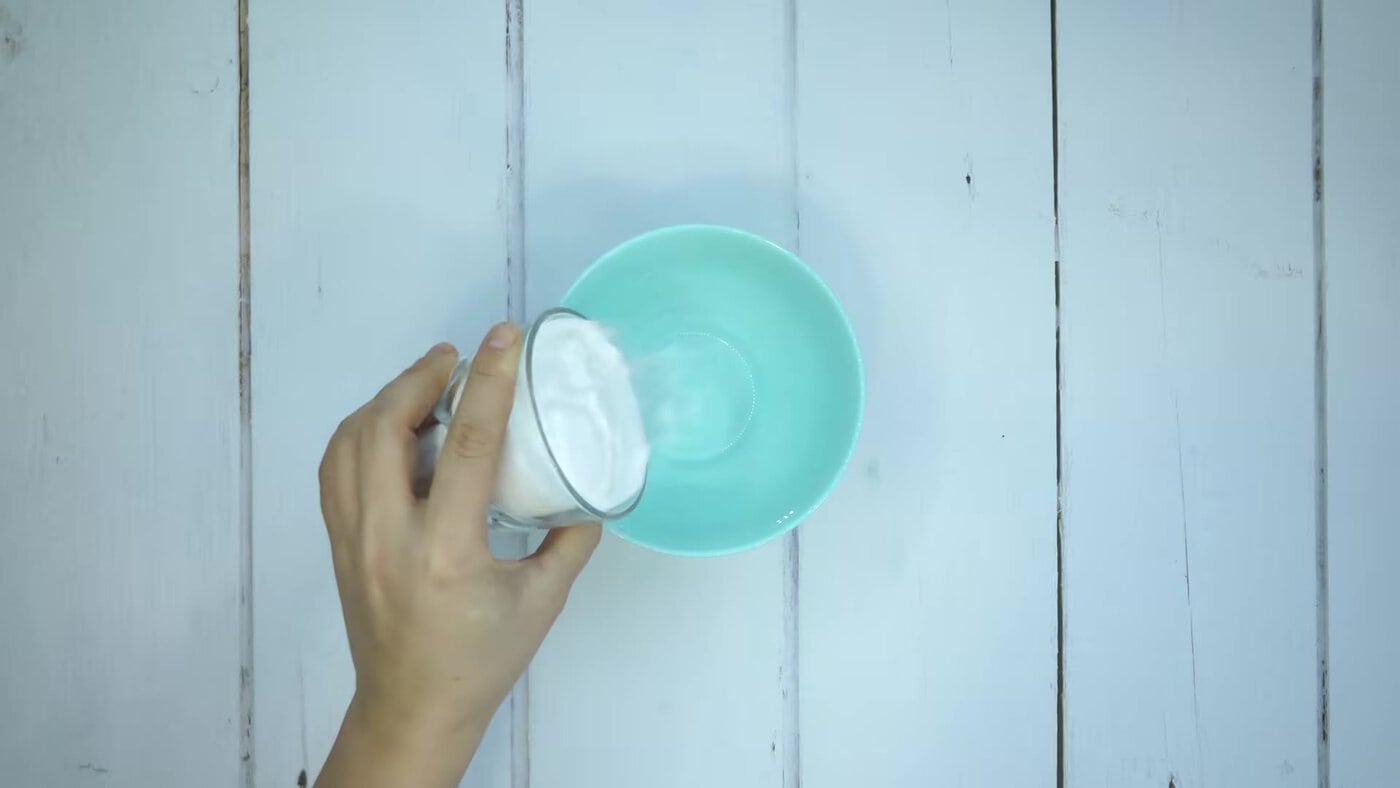
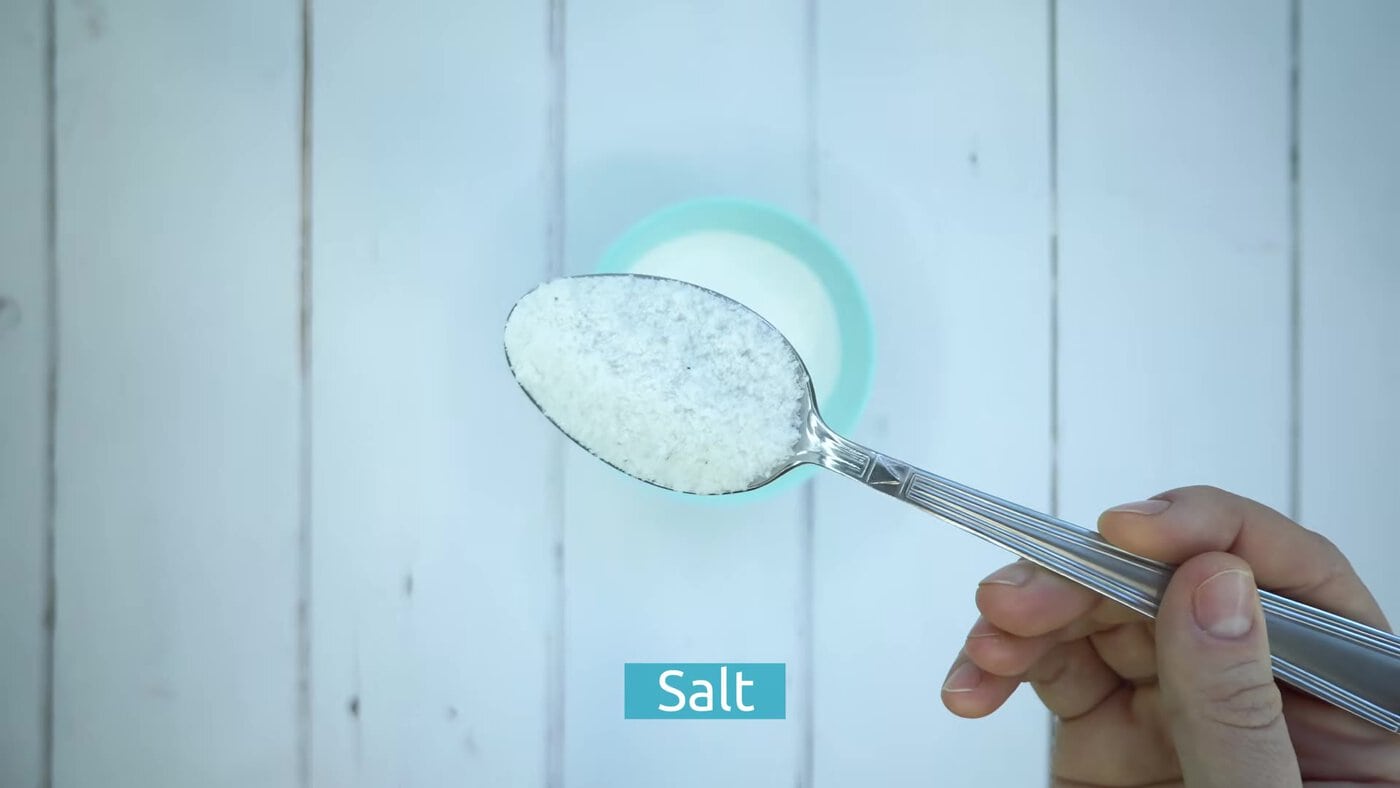
Add 1 tablespoon of salt and stir it into the baking soda.
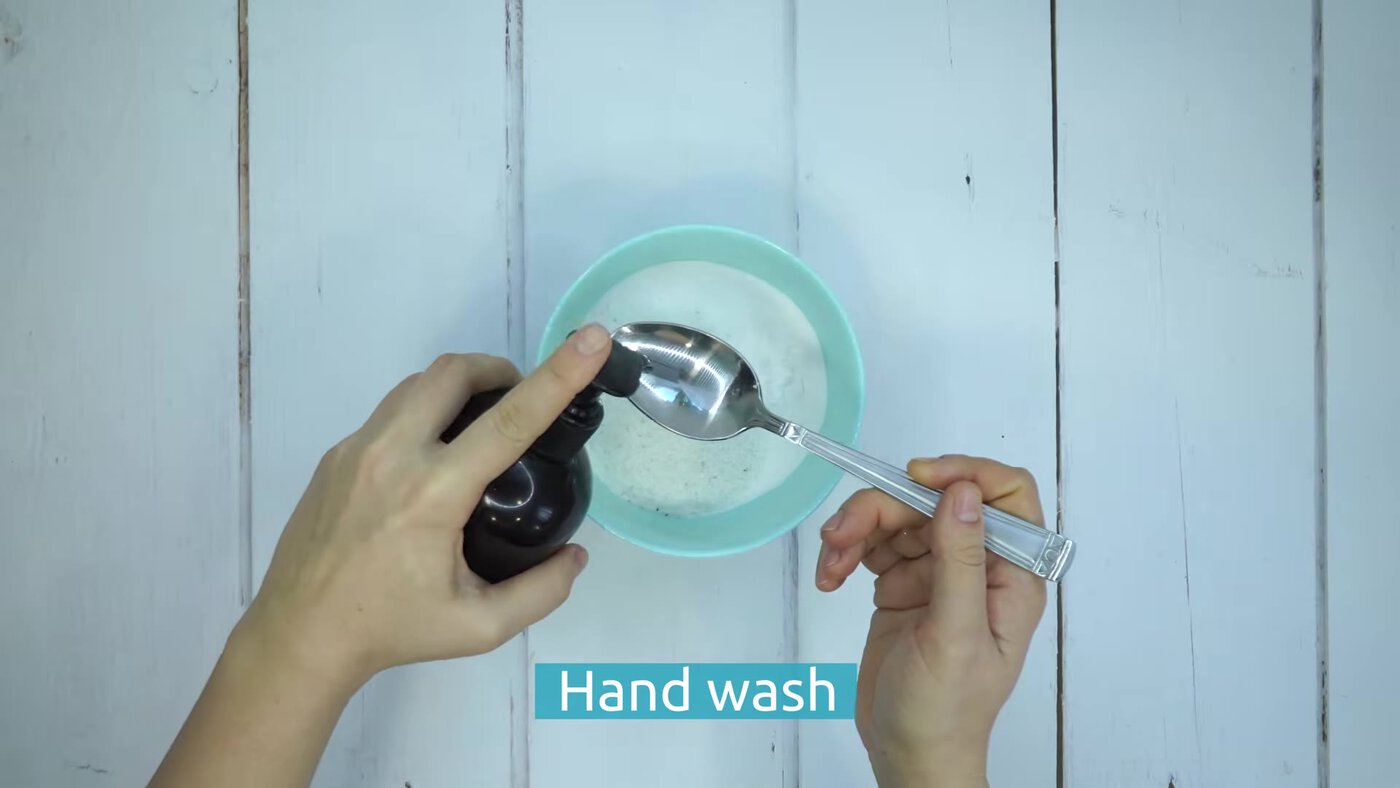
Pump 2 tablespoons of hand wash into the bowl.
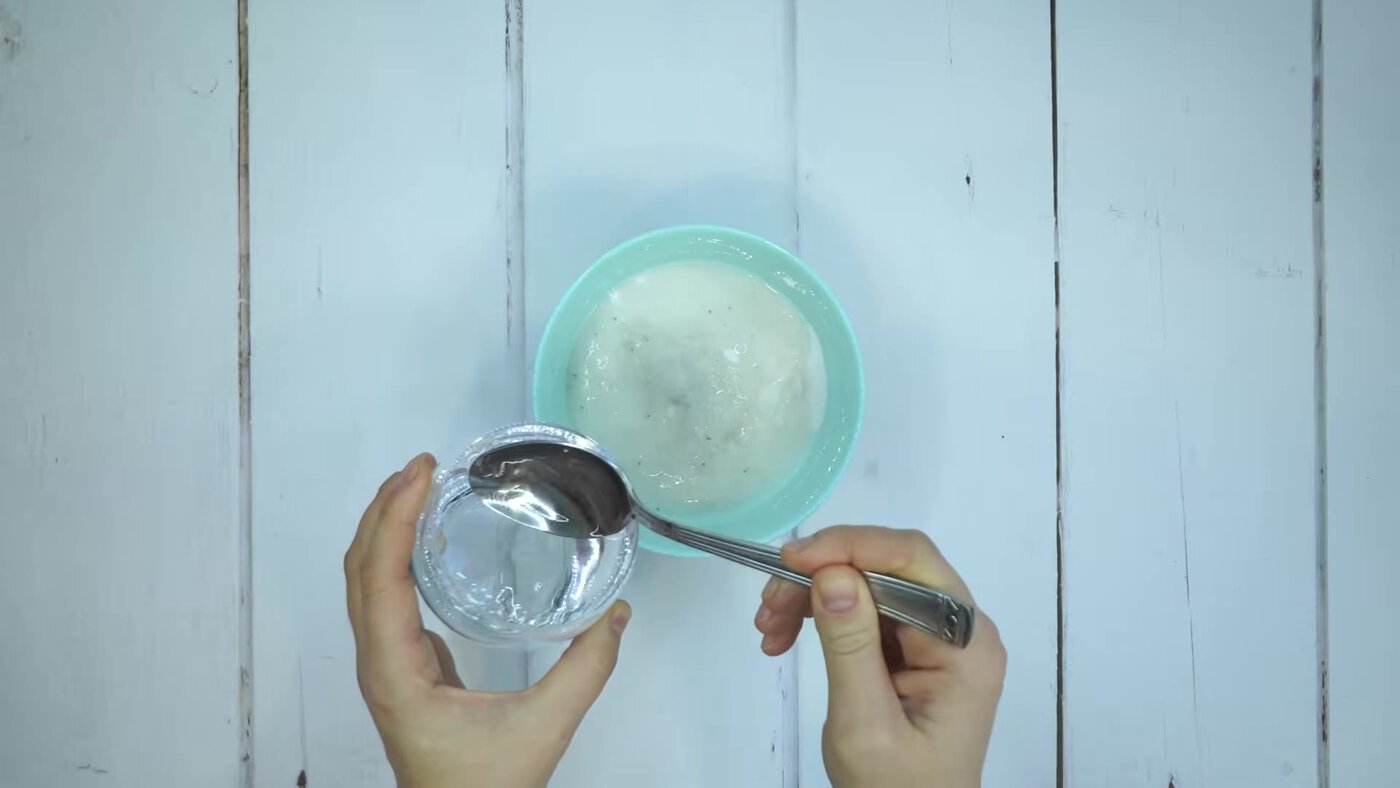
Add 4 tablespoons of water, one spoonful at a time.
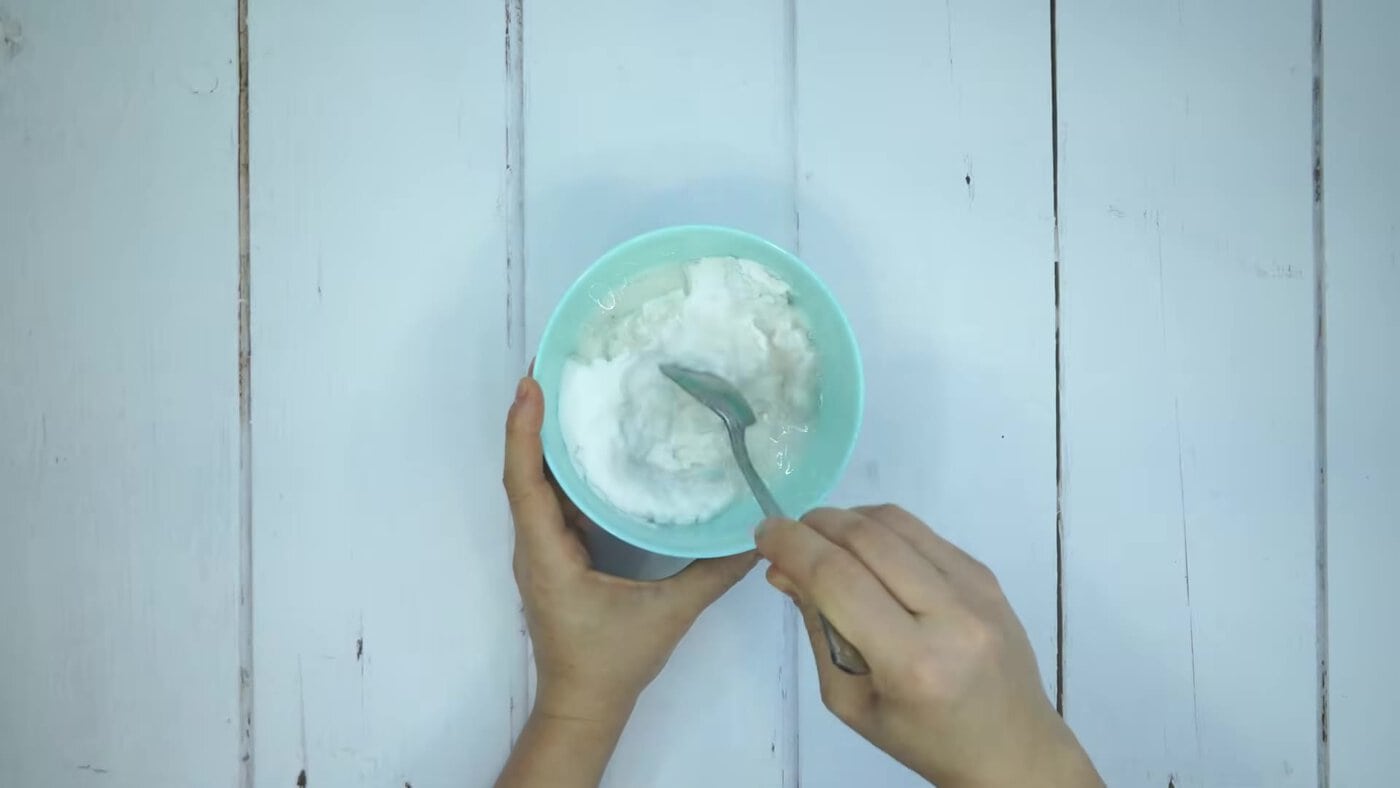
Stir hard until it turns into a thick, white dough that holds together when you squeeze it. If it still crumbles, add a few more drops of water; if it’s sticky, add a spoonful of baking soda.
Squeeze and roll the dough between your palms into three smooth balls: a big one, a medium one and a small one.
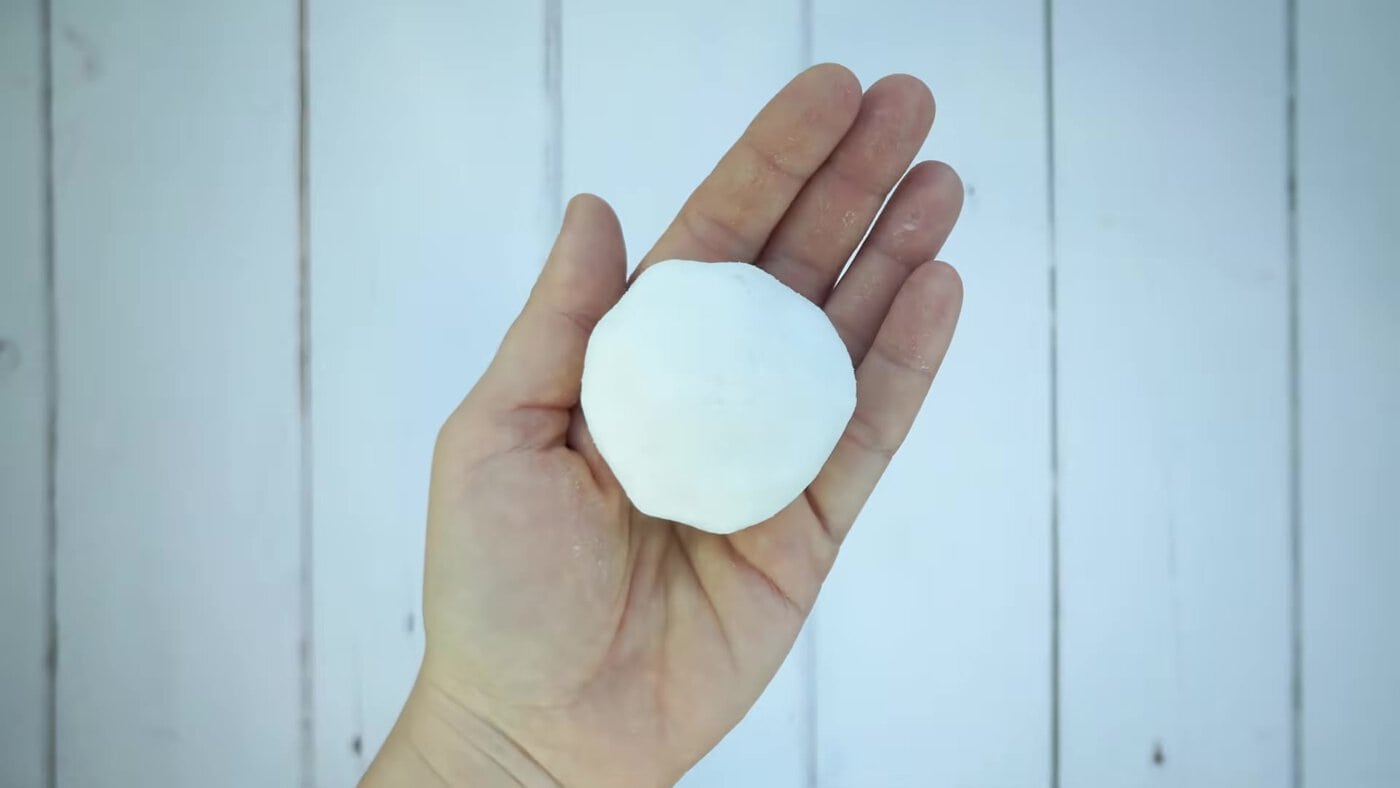
Stack the balls on a plate, biggest at the bottom, pressing each one gently onto the one below.
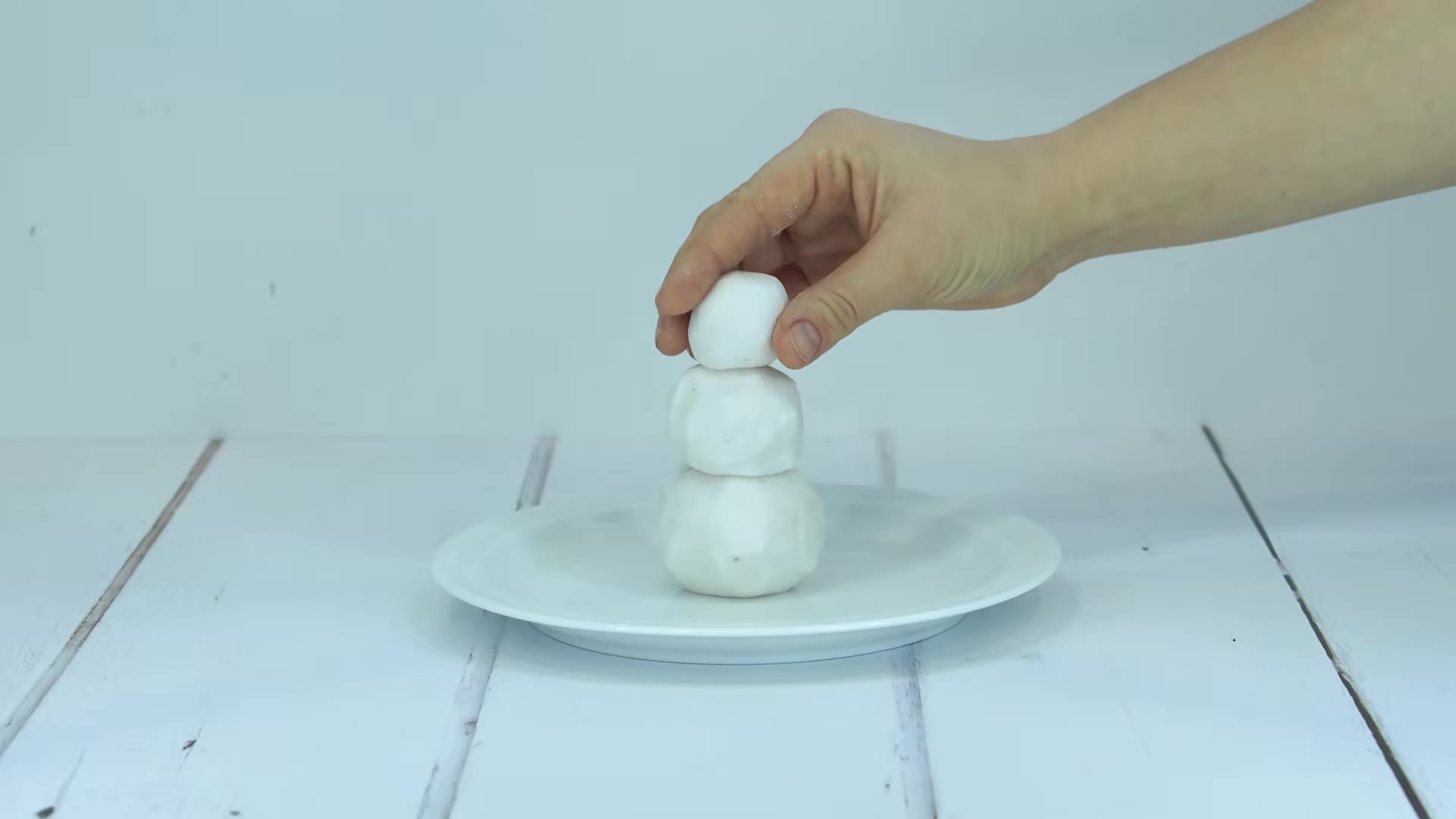
Roll the orange paper into a cone for a carrot nose and press it into the head. Push a twig into each side for arms.
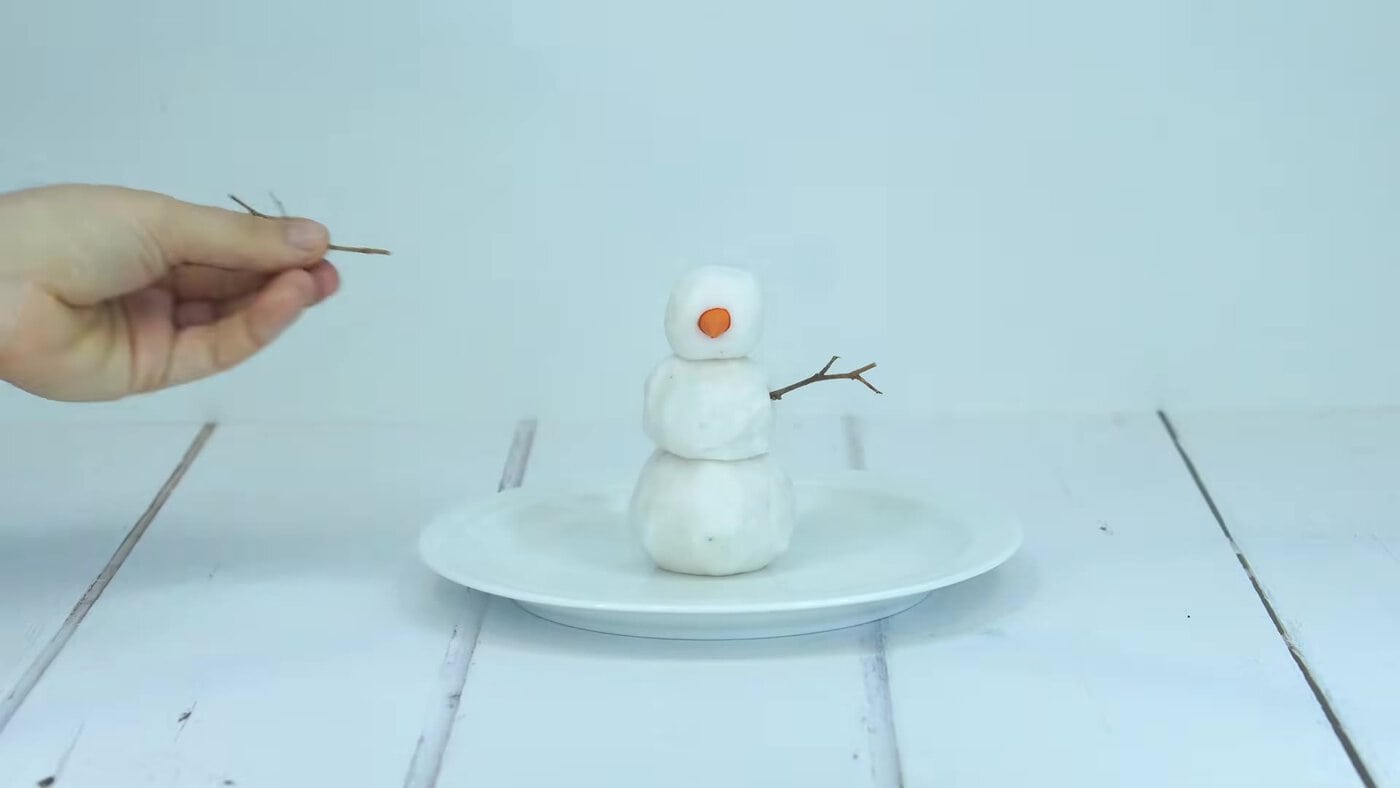
Paint two eyes and a row of buttons with watercolour paint.
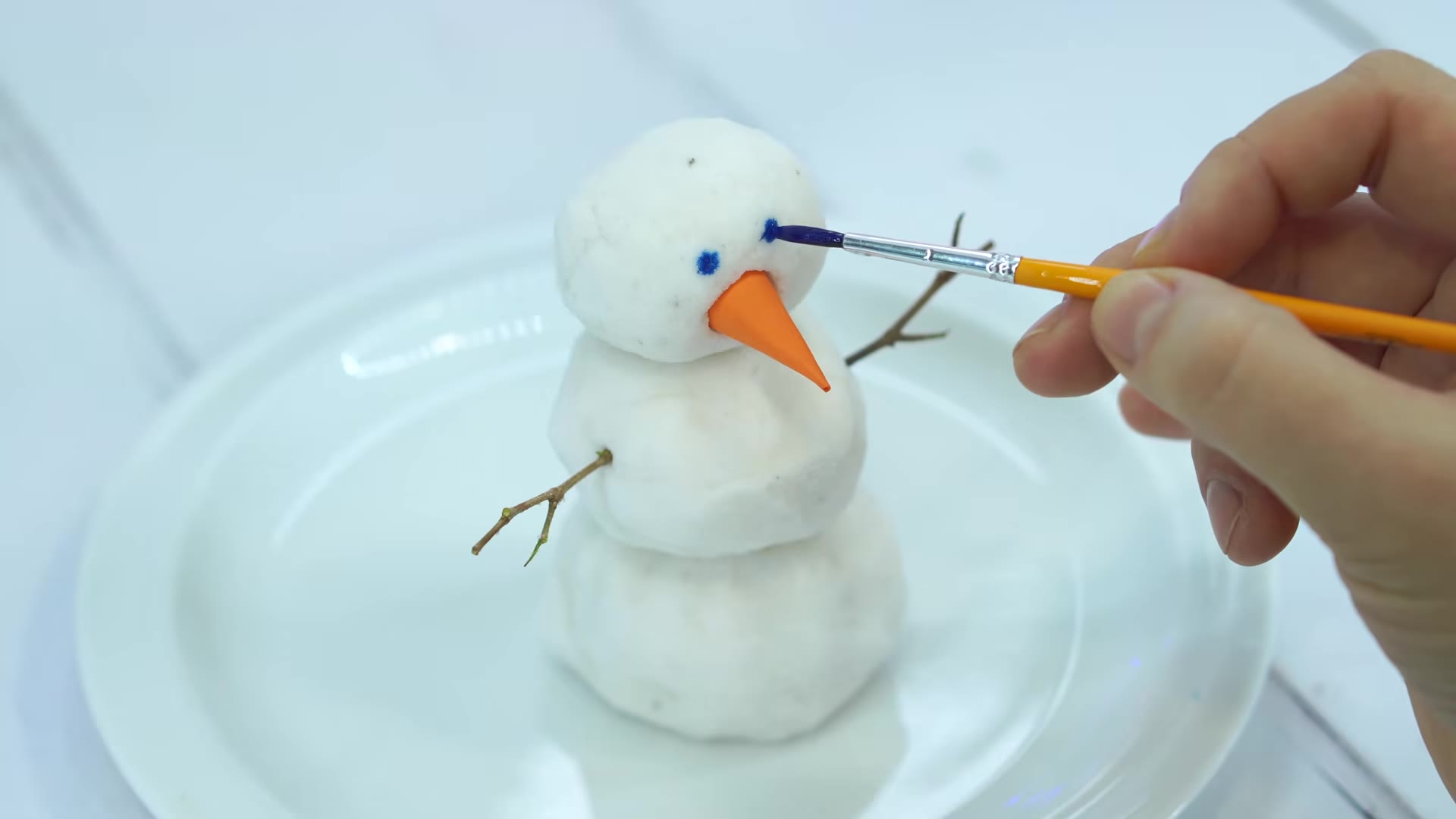
Pour some vinegar into a small glass and fill the pipette.
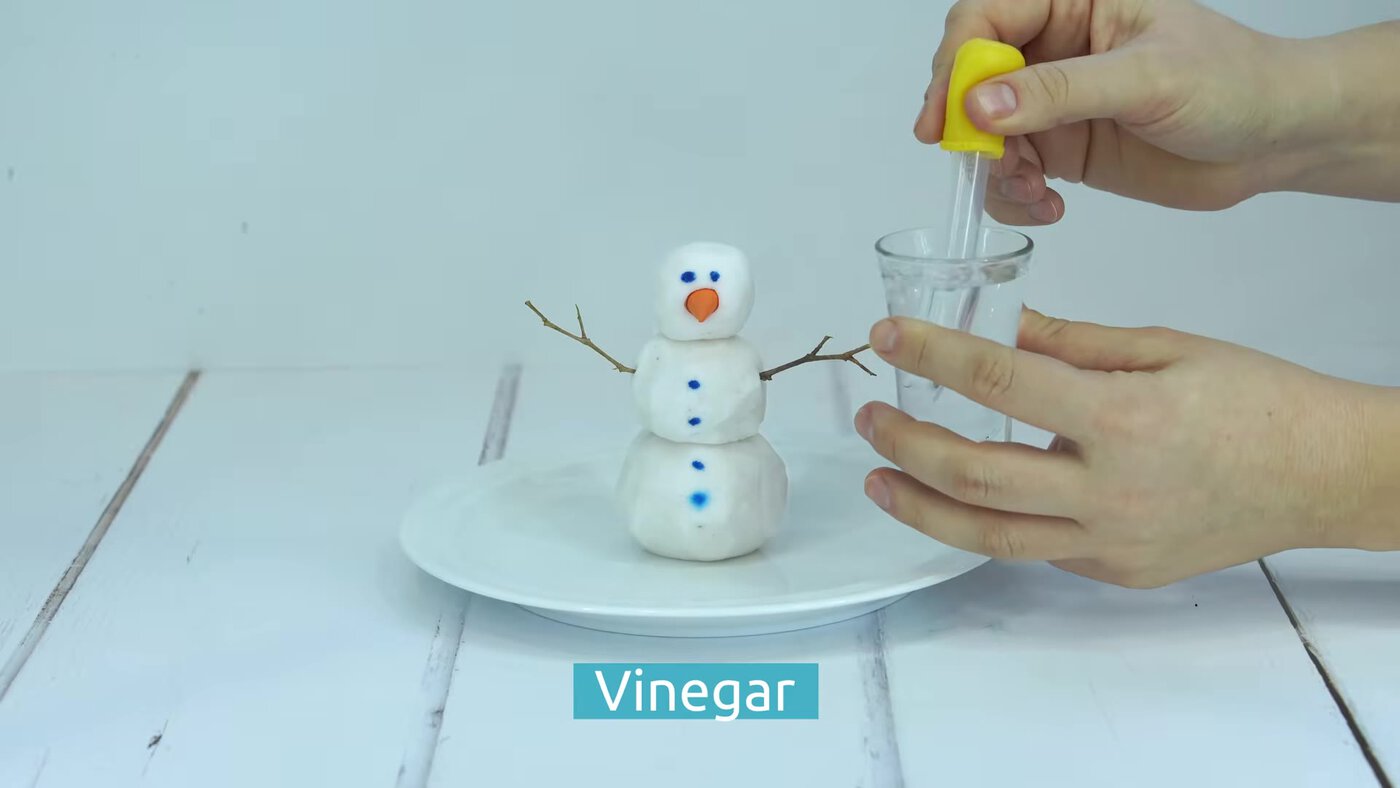
Drip the vinegar onto the snowman’s head and keep going. Watch it fizz, foam and melt away!
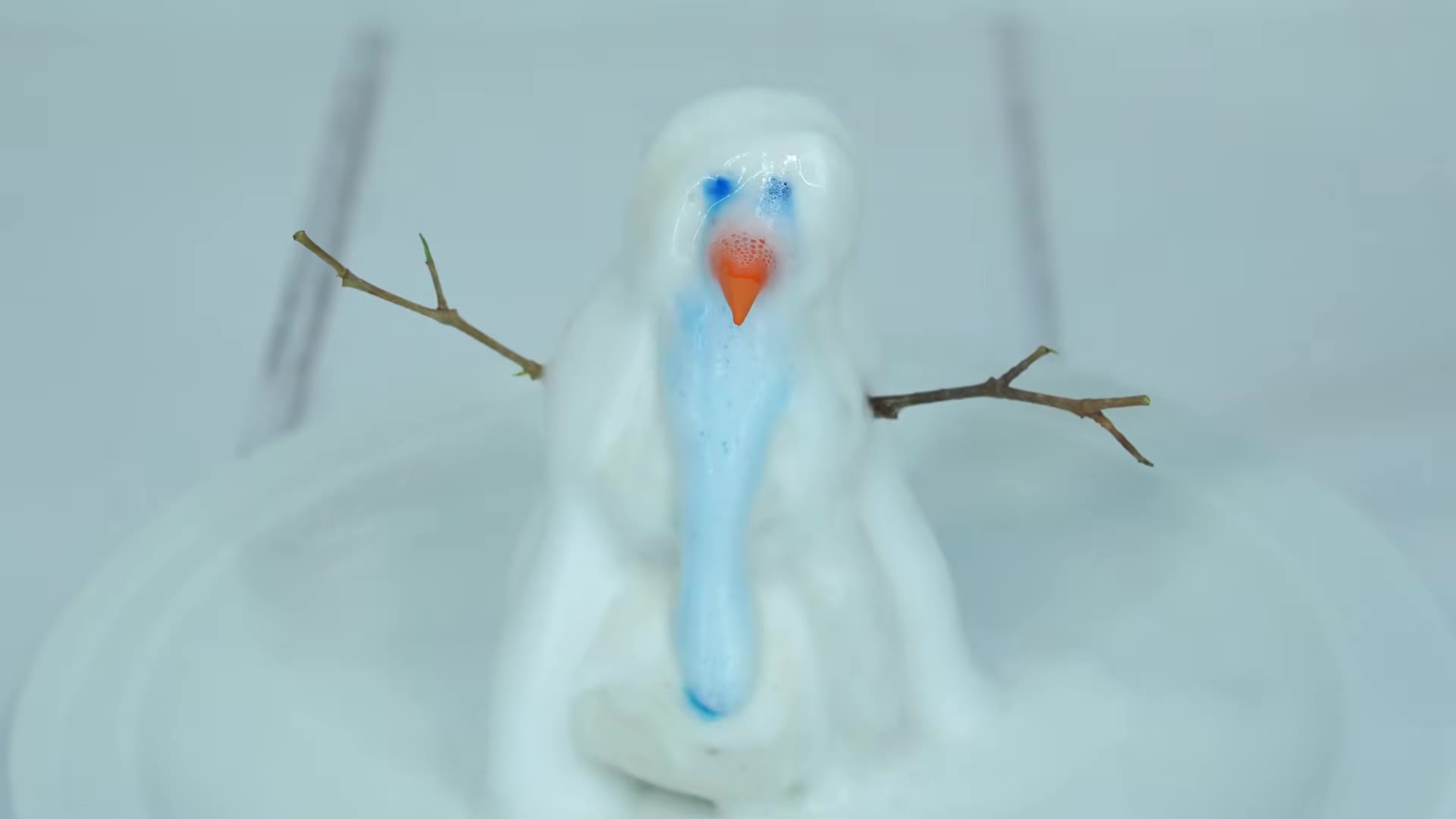
Video Tutorial for the Melting Snowman Experiment
Got some baking soda and vinegar left over? Try our fireworks in a jar next, or make a DIY snow globe for a snowman that stays.
What Should Happen
As soon as the first drops land, the head starts to fizz and white foam bubbles up where the vinegar touches. Keep dripping and the foam grows and slides down the body. The head softens, the painted eyes and buttons blur, and the watercolour runs down the front in coloured streaks. In our video the snowman slumps into a flat, foamy puddle on the plate with just the orange nose and a twig left behind.
The fizz only happens where the vinegar goes, so the snowman melts from the top down and from the side you’re dripping on. When the fizzing stops in one place, add more drops there and it starts again.
The Science Explained
The snowman isn’t really melting: it’s a chemical reaction. Melting is when something solid turns to liquid because it warms up, like ice turning into water. Our snowman doesn’t warm up at all. Instead, two ingredients meet and turn into brand-new things.
Baking soda and vinegar make a gas when they meet. Vinegar is an acid, the sour kind of liquid. Baking soda is the opposite kind, called a base. When they touch, they react and make lots of tiny bubbles of a gas called carbon dioxide. It’s the same gas that makes the bubbles in fizzy drinks.
The hand wash turns the bubbles into foam. Without soap, the bubbles would pop as soon as they reached the air, like in a glass of lemonade. Soap makes the bubbles stronger, a bit like when you blow bubbles with a bubble wand. So the gas gets trapped in a thick white foam that looks like snow.
The snowman falls apart because the foam pushes the dough apart. The dough is just powder stuck together with a little water and soap. As the vinegar soaks in and bubbles grow inside it, the powder can’t hold its shape any more. It goes soft and slides down, just like a real snowman on a sunny day.
The salt doesn’t take part in the fizz. Salt doesn’t react with vinegar or baking soda. We can’t say for sure why it’s in the recipe: it may just make the dough a little grainier, more like snow.
The paint runs because it mixes with the wet foam. Watercolour paint dissolves in water, so as the snowman gets wet, the colour runs down its front.

Going Deeper Into The Science
Baking soda is sodium bicarbonate, and the acid in vinegar is acetic acid. Household white vinegar is mostly water with about 5% acetic acid. When the two meet, they react in two quick stages. First they swap partners and make sodium acetate and carbonic acid. The carbonic acid is unstable and immediately breaks down into water and carbon dioxide gas:
NaHCO₃ + CH₃COOH → CH₃COONa + H₂O + CO₂
Every spoonful of vinegar makes a surprising amount of gas. One tablespoon (15 ml) of 5% vinegar holds about 0.75 g of acetic acid. That reacts with roughly 1 g of baking soda and releases about 300 ml of carbon dioxide at room temperature: around a mugful of gas from one spoon of vinegar. That’s why the foam looks so much bigger than the vinegar you added.
The vinegar runs out long before the baking soda does. Using up a whole glassful of baking soda would take litres of vinegar. With a pipette you add only a few spoonfuls, so most of the baking soda never reacts. It just gets wet and loses its shape, which is why the snowman collapses into a soft, snowy slush rather than vanishing completely. Chemists call the ingredient that runs out first the limiting reactant: here, it’s the vinegar.
Soap makes foam by lowering surface tension. Soap molecules have one end that likes water and one end that avoids it. They line up on the surface of each bubble and make its thin wall stretchier and slower to drain, so the bubbles last instead of bursting. Adding washing-up liquid to a baking soda volcano works the same way, and so does the giant foam of elephant toothpaste.
Most chemical changes, like this one, can’t easily be undone. When ice melts, you can freeze the water again and get your ice back. That’s a physical change. Once the baking soda and acetic acid have reacted, they have become sodium acetate, water and carbon dioxide, and you can’t turn them back into a snowman. Signs of a chemical change include a gas being given off when nothing is being heated, like the fizzing here. In England, this exact reaction is named in the Year 5 science curriculum as an example of a change that is not usually reversible.
This reaction is everywhere in the kitchen. Baking powder is baking soda mixed with a dry acid, so it makes carbon dioxide when it gets wet and warm, and that gas makes cakes rise. Some old fire extinguishers used the same kind of reaction: a bottle of acid tipped into a bicarbonate solution, and the gas pushed out a jet of water.
Troubleshooting
| Problem | Likely cause | Fix |
|---|---|---|
| Dough crumbles and won’t make a ball | Too dry | Add water a few drops at a time and squeeze again |
| Dough is sticky and the balls sag | Too wet | Mix in a spoonful more baking soda |
| Snowman cracks or the head falls off | Balls too dry, or not pressed together | Press each ball down gently as you stack; a dab of water helps them stick |
| Only a little fizz, no foam | Hand wash left out, or baking powder used | Use baking soda and keep the hand wash in the dough |
| Fizz stops halfway | That spot has run out of vinegar | Keep dripping fresh vinegar where it’s still dry |
Try Changing One Thing
Make two snowmen of the same size from the same batch of dough, and change just one thing. Before you start, ask your child to guess which snowman will melt faster, and why.
- Vinegar or lemon juice? Drip vinegar on one and lemon juice on the other, the same number of drops on the same spot. Lemon juice is an acid too, so it should fizz. Which makes more foam?
- Warm or cold? Put one snowman in the freezer for an hour first. Reactions usually slow down in the cold, so the frozen snowman should fizz more slowly. Does it?
- With or without soap? Leave the hand wash out of one batch of dough and use 2 extra tablespoons of water instead. Prediction: lots of fizz, but much less foam.
Count the drops or time the melt with a phone so you’re comparing numbers, not just guesses.
How to Clean Up
The leftovers are only baking soda, salt, soap, a little sodium acetate and vinegar, so you can rinse the foam and slush down the sink with plenty of water. Wipe the plate or tray, and wash hands afterwards: baking soda and soap can leave skin feeling dry.