
-
 5-8 , 9-10 , 12+
-
 5 to 20 min
-
 Easy
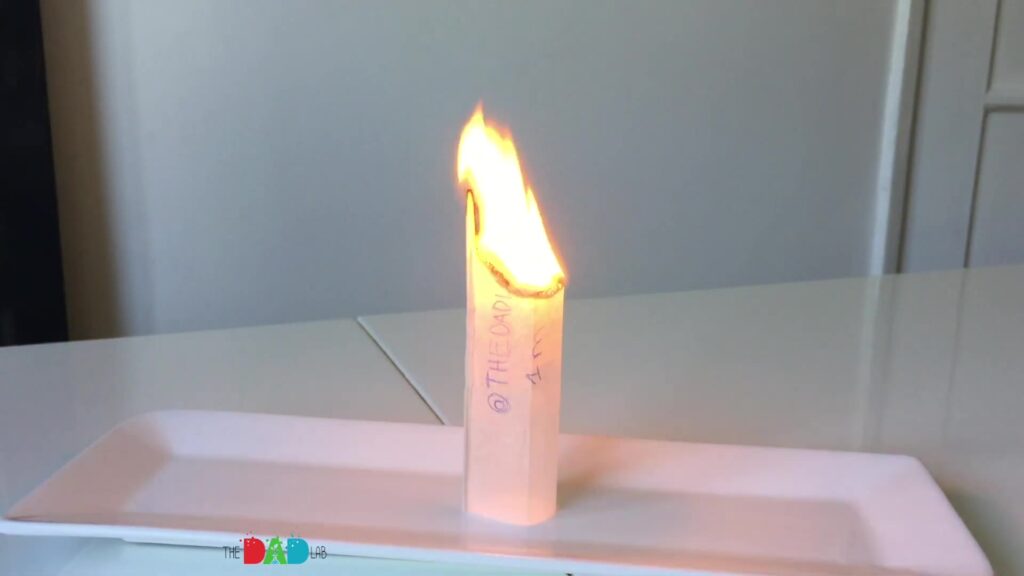
Flying wish paper is a wish written on thin paper that you set alight: it burns down and the last feathery bit of ash lifts off and floats up, carrying your wish with it. Shops sell special wish paper kits, but you don’t need one: an ordinary tea bag you already have does the same job, and it makes a lovely little ritual for Christmas Eve or New Year’s Eve.
It works because of hot air. The flame heats the air inside the paper tube, the hot air rises, and when only a feather-light shell of ash is left, the rising air carries it up. Some people call it a flying tea bag or a tea bag rocket. My own wish, back on Christmas Eve 2016, was a cheeky one for a million Instagram followers.
List of Materials
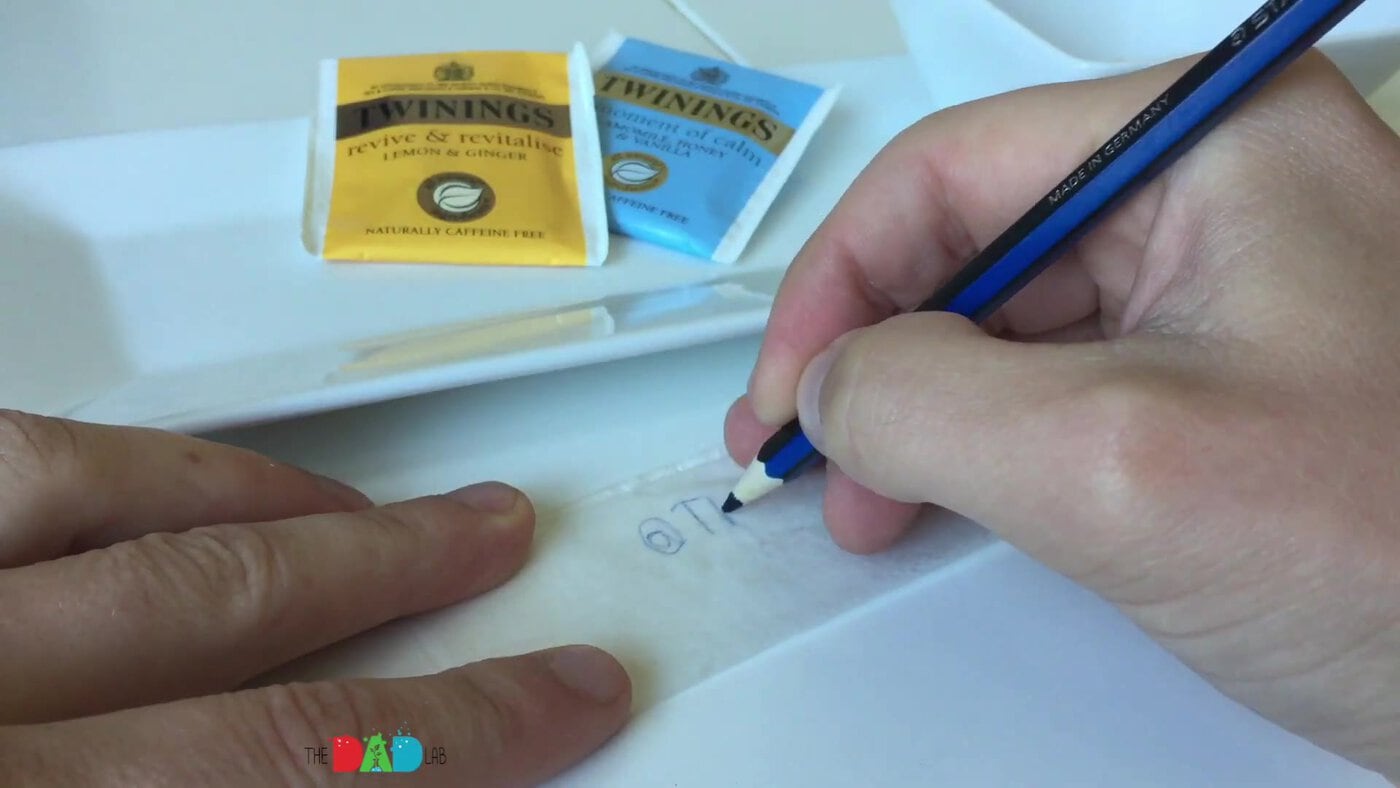
The tea bag decides whether it flies. It needs to be thin, light paper that opens into a tube once it’s empty. The string-and-tag bag in our video (Twinings) opened into a tube easily. Silky pyramid bags are a kind of plastic mesh and melt instead of burning to ash, so skip those. Brands differ and change their paper, so if one bag burns down and stays put, simply try another brand. Quick home test: cut the top off, tip out the leaves and see if the bag opens into a tube without tearing along a seam. If it does, it’s worth a try. Write lightly: the paper is thin and tears easily.
This is a fire activity, so an adult is in charge from start to finish and does all the lighting.
- Adults only for the flame. Use a long lighter or a match, light the top, then step back. Children stand at least an arm’s length away, with long hair tied back and loose sleeves pushed up.
- Clear space above and around. The last piece lifts off while it is still burning, with a small flame, and floats up before it goes out. Do it in a room with plenty of space above the table, and keep it well away from the Christmas tree, curtains, cards, paper decorations and shelves.
- Heatproof plate only. Never stand the tube on paper, card or a tablecloth: if it falls over it can scorch whatever is under it.
- Still air, indoors. Shut windows and turn off fans. A draught can knock the tube over or blow the flame sideways, and outdoors the wind spoils it.
- Smoke alarms. A tea bag makes only a puff of smoke, but don’t do it right under an alarm, and never take the battery out.
- Never leave it. Watch until the flame is completely out and the ash has settled. Keep a glass of water nearby.
- Ash marks. Let the ash land and check it’s cold before touching. It is very fragile and leaves black smudges on fingers and pale surfaces. Wipe up with a damp cloth.
- Toddlers and preschoolers can watch from an adult’s lap, well back from the plate, but shouldn’t be near the flame. Matches and lighters go out of reach straight afterwards.
Step by Step Instructions
Take a tea bag with a string and tag out of its paper sleeve.
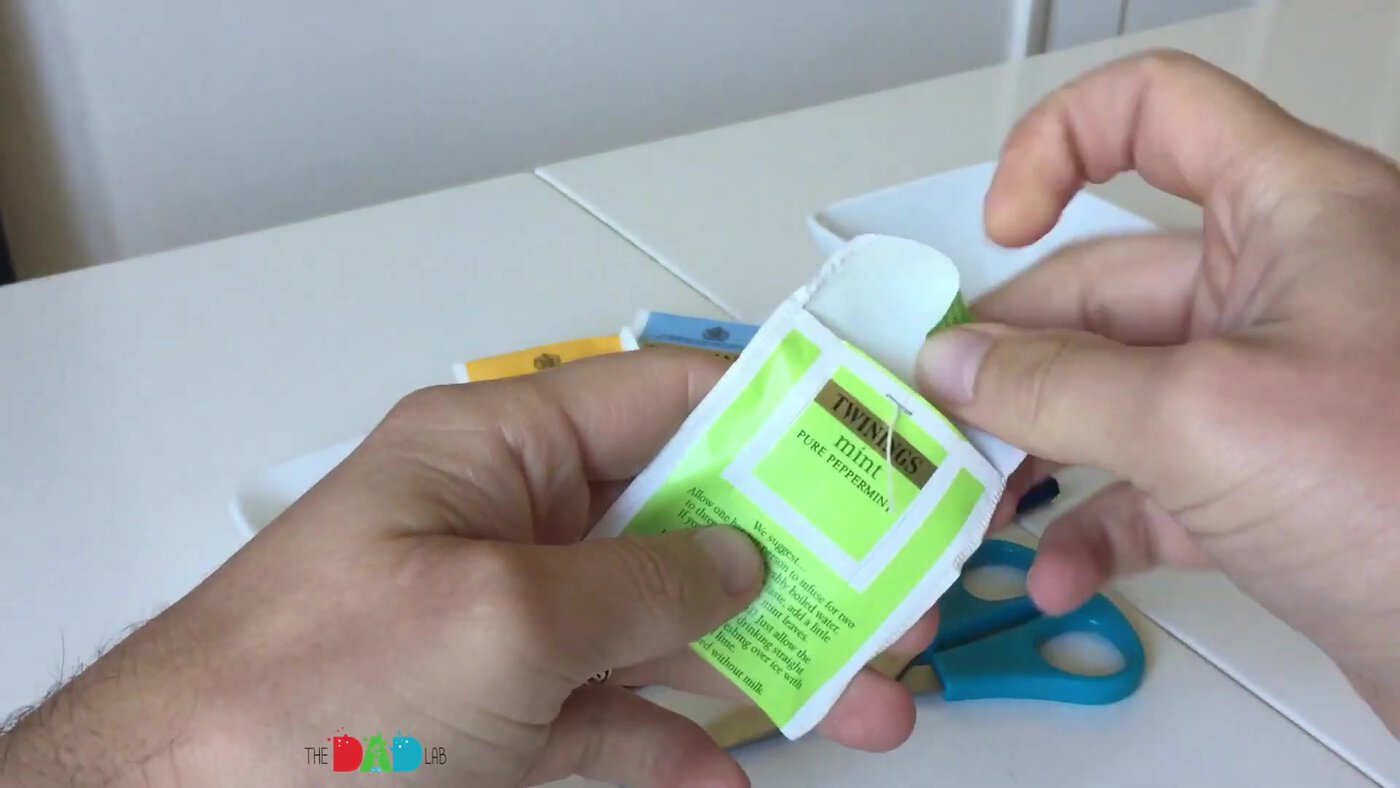
Cut straight across the top of the tea bag, just below the string, so the string, tag and any staple come off.
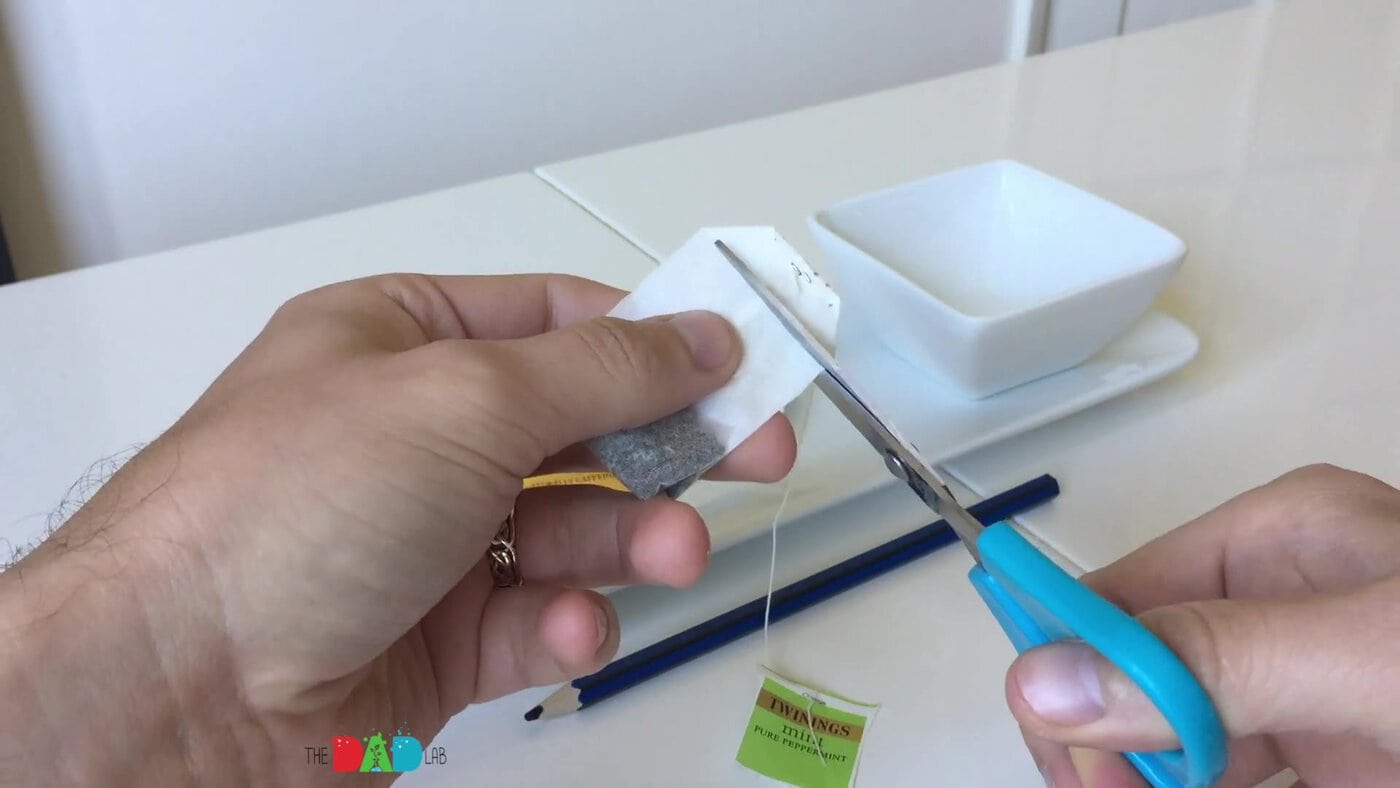
Tip all the tea leaves out into a small bowl and give the bag a gentle shake to empty it.
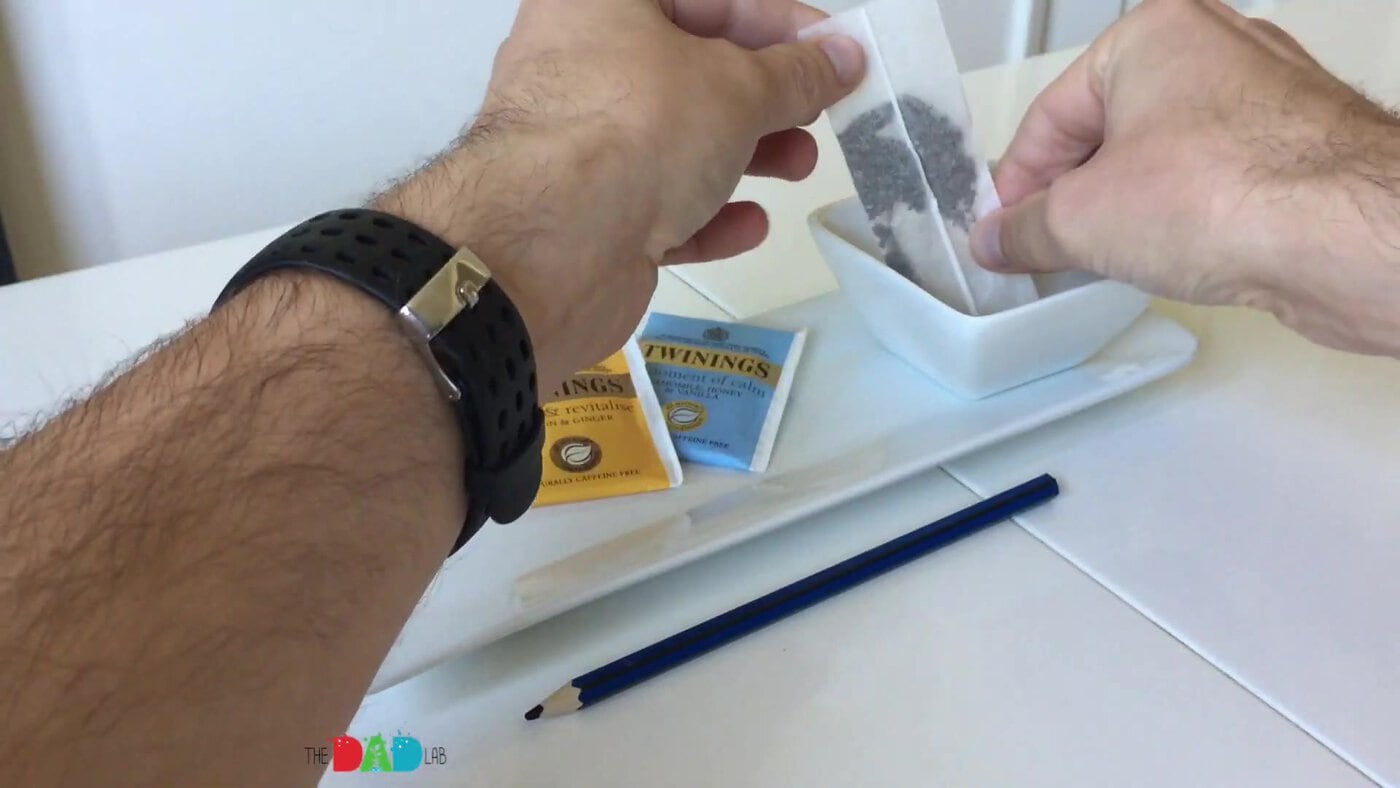
Open the empty bag out carefully into a tube, then press it flat so you can write on it.
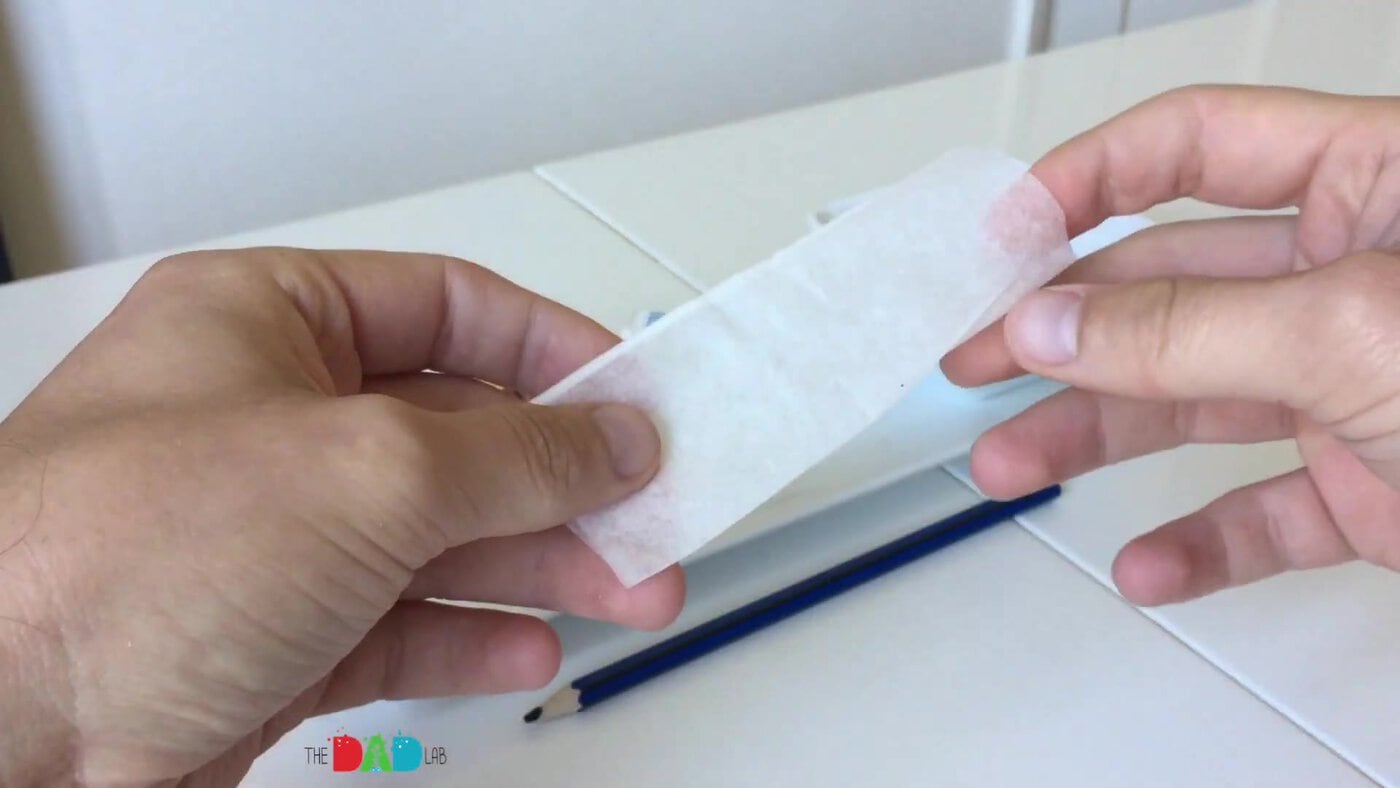
Write your wish on the paper with a pencil or ballpoint pen, pressing lightly so it doesn’t tear.
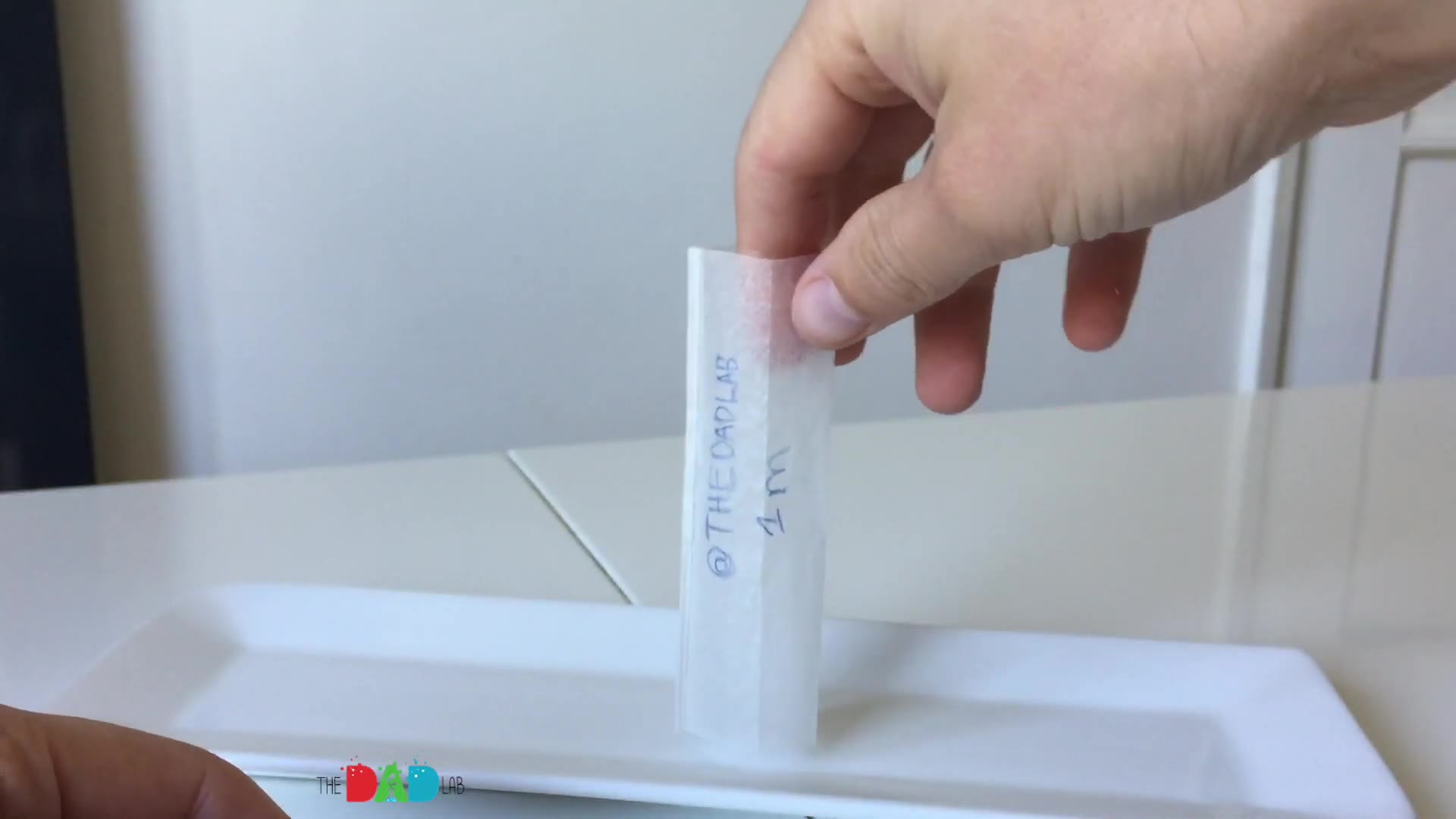
Open it back into a tube and stand it upright on the heatproof plate, wish facing out. If it leans, trim the bottom edge straight.
Adult: light the top edge of the tube with a long lighter, then step back.
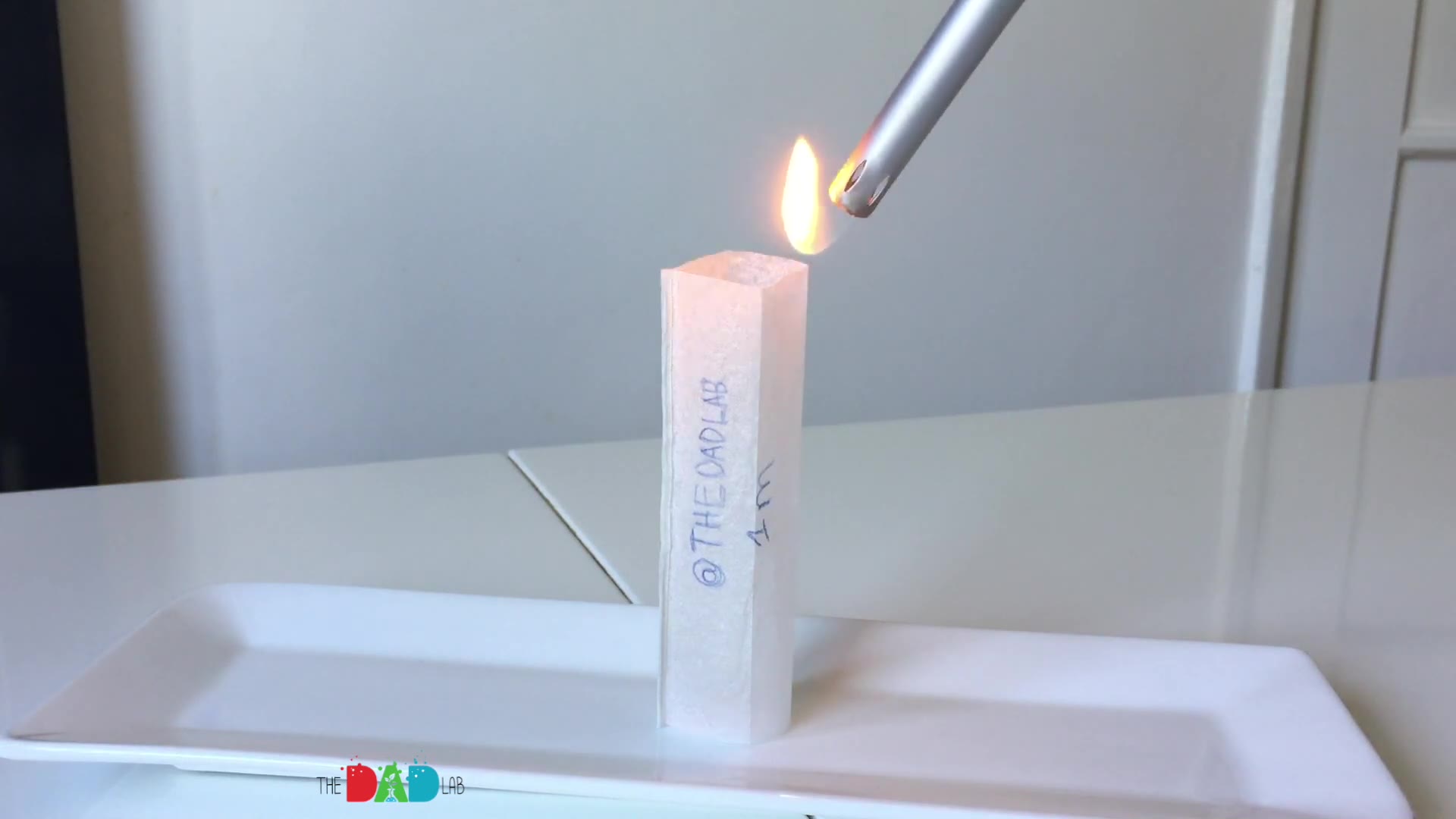
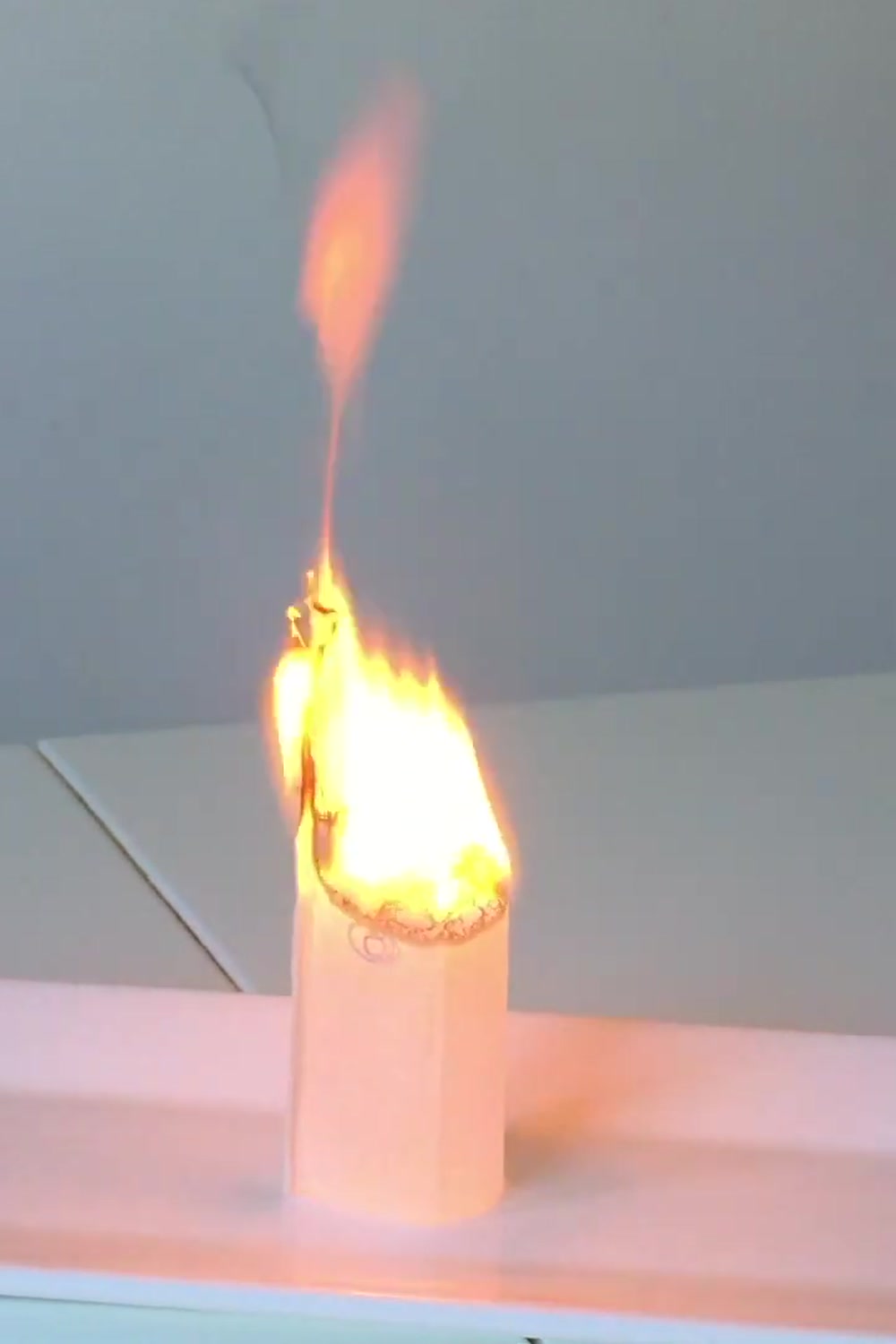
Watch the flame burn down the tube. When it reaches the plate, the last piece lifts off, still burning, and floats up into the air.
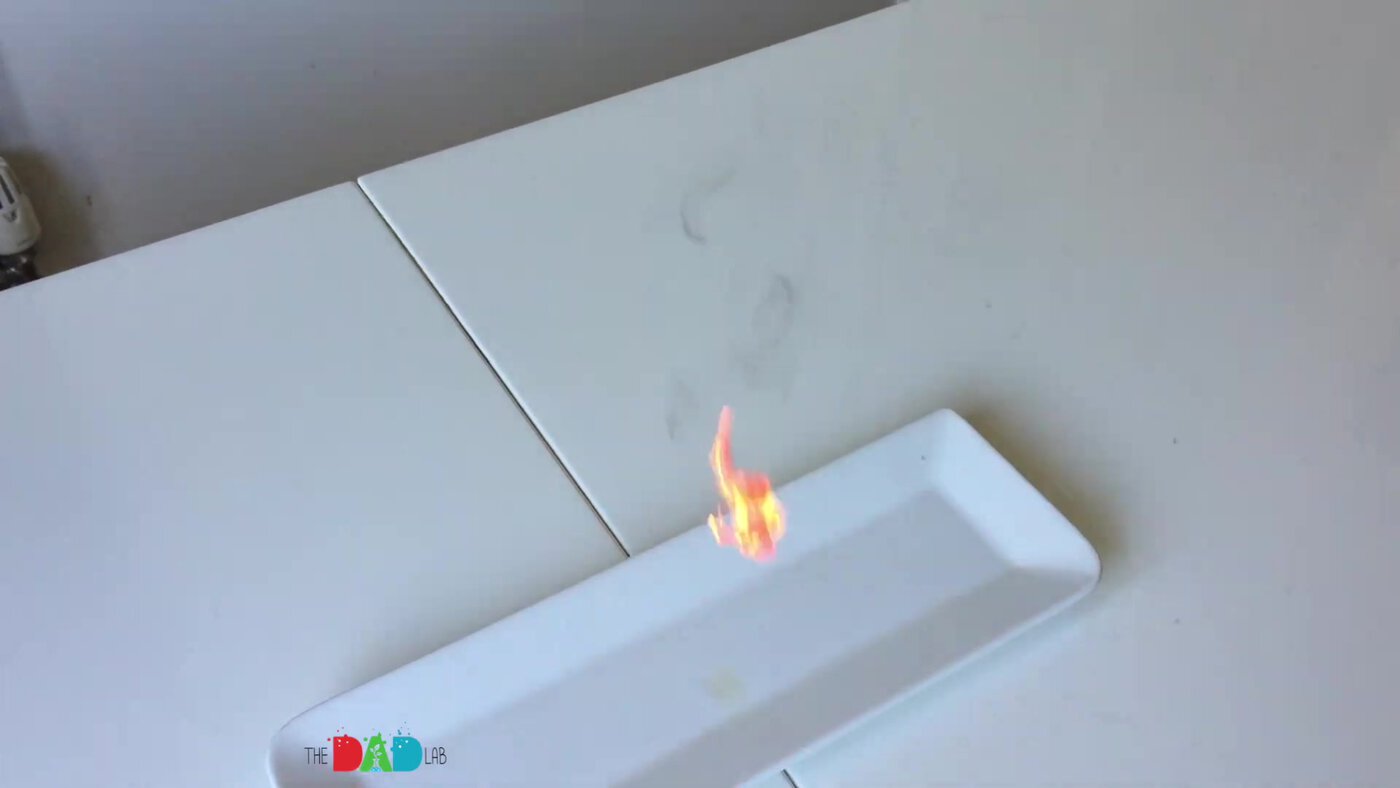
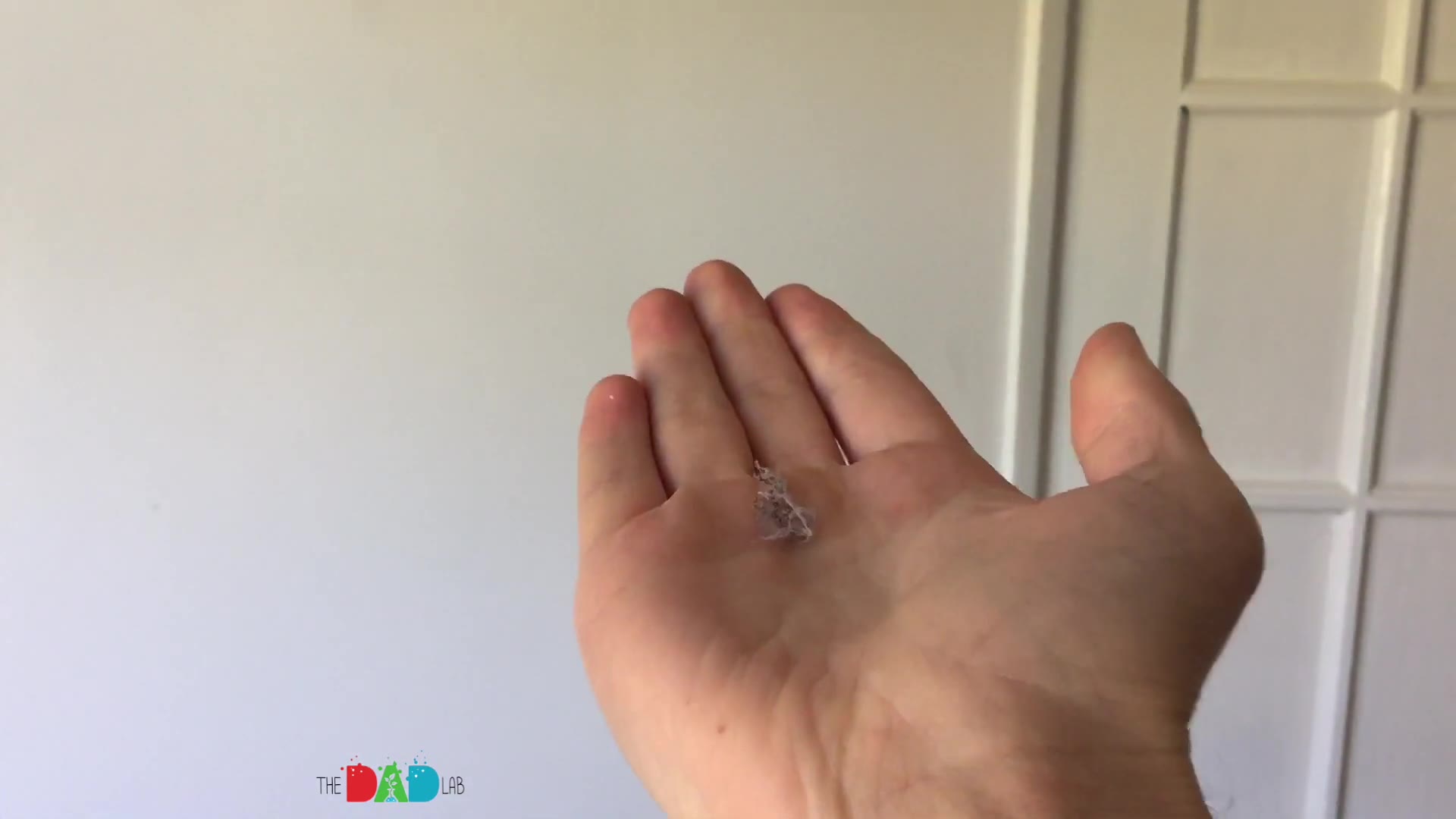
Make your wish as it rises, then let the ash drift back down. Only once it has landed, stopped glowing and is cold can it rest in your palm, and it smudges.
Video Tutorial for Flying Wish Paper
Want more Christmas science? Try our melting snowman experiment, or make a DIY snow globe to keep.
What Should Happen
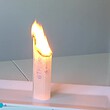
The top edge catches in a second or two and a tall orange flame burns slowly down the tube. In our video it took about 8 seconds to reach the bottom. The paper turns black behind the flame, and your writing stays visible until the flame passes it.
Just as the flame reaches the plate, the last of the tube lifts off. In our video it rose still burning with a small flame, then the flame went out within a second or two and a thin, grey-black shell of ash kept drifting upwards. Ours floated up for a few seconds against the wall, then drifted gently back down and had cooled enough to land in an open hand a few seconds later (still, let it land and check before touching). A little ring of ash is often left behind on the plate.
If the tube burns all the way down and nothing lifts, don’t worry: that happens with some tea bags. See the troubleshooting table below.
The Science Explained
Hot air rises. When air gets warm, it spreads out and gets lighter than the cooler air around it. Lighter air floats up, the way a beach ball pushed under water pops back up. That’s why the warmest air in a room is near the ceiling.
The tube is a tiny chimney. The flame heats the air inside and above the tube. That hot air rushes upwards, and cooler air flows in at the bottom to take its place. So there is a little stream of rising air, all the time the tea bag is burning.
At first the paper is too heavy to fly. While most of the tea bag is still paper, the rising air can’t lift it. But burning turns paper into smoke, gas and a very thin layer of ash. When the flame gets to the bottom, the whole tube has become an ash shell that weighs almost nothing.
Then the rising air carries it away. The stream of hot air pushes up on the feather-light ash, and up it goes, a bit like sparks and bits of ash that float up above a bonfire. Once it rises out of the warm air, it cools and slowly drifts back down.
Why a tea bag? Tea bag paper is very thin and full of tiny holes, so the tea can soak through it. That makes it light, and it burns down to almost nothing. Thicker paper leaves heavier ash that just sits on the plate.

Going Deeper Into The Science
The flying wish is a neat demonstration of convection: heat carried by a moving fluid (here, air). Air near the flame is heated to several hundred degrees Celsius. Gas expands when it’s heated, so the same mass of air takes up more space and its density drops. At room temperature air has a density of about 1.2 kg per cubic metre; heated to around 300 °C, it’s roughly half that. The denser, cooler air around it sinks and pushes the hot air up, creating a rising column called a plume. In the tube the effect is concentrated, the same stack effect (chimney effect) that makes a chimney draw air in at the bottom of a fire.
The tube itself is lifted by drag, the push of moving air on an object. Whether it lifts depends on a contest between two forces: its weight pulling down and the drag of the updraft pushing up. Tea bag filter paper is made from long, thin plant fibres (usually abaca, also called Manila hemp, mixed with wood pulp) and typically weighs only about 12 to 17 grams per square metre. A whole opened tea bag weighs around a tenth of a gram. Burning breaks the paper’s cellulose down into carbon dioxide and water vapour, which leave as gas, and what remains is a fragile skeleton of char and mineral ash, only a small fraction of the original weight. With so little mass and a large surface catching the air, the updraft wins.
That’s also why the timing matters. The tube can’t take off while unburnt paper is still holding it down, and by the time the flame reaches the bottom the hot plume is at full strength right underneath what’s left. The ash rises until it leaves the warm air, then cools and falls slowly, because a light, wide object has a very low falling speed (its terminal velocity).
Many guides call this a mini hot air balloon. That’s a helpful picture: both rise because of hot, less dense air. The difference is that a balloon traps its hot air inside an envelope, while the tea bag ash rides on an open stream of rising air, more like a glider in a thermal or embers above a fire. You can watch convection the other way round, in water, in our fireworks in a jar experiment, where slightly denser coloured water sinks and swirls through clear water.
Why do some bags fail? Some tea bags contain a little plastic (polypropylene) to heat-seal their edges, and pyramid bags are made of plastic mesh. Plastic melts and shrivels instead of leaving a light ash shell. Heavier, thicker paper leaves too much ash to lift, and a damp bag burns unevenly. Changing one of these things at a time is a great way to turn the trick into a real investigation.
Troubleshooting
| Problem | Likely cause | What to try |
|---|---|---|
| It burns down but nothing flies | Paper too heavy, or the bag contains plastic | Try a different brand of plain paper string-and-tag tea bag |
| The tube falls over | Wonky bottom edge, or a draught | Trim the bottom straight and close windows; stand it on a flat plate |
| The flame goes out halfway | Draught, or the tube was squashed flat | Light it in still air and open the tube fully round |
| It lifts a little and drops | Not much hot air under it | Try a longer tea bag for a taller tube, and check it stands straight |
| It burnt the thing underneath | It wasn’t on a heatproof plate | Always use a ceramic or metal plate or tile |
Turn It Into a Science Project
Older children can make this a fair test. Pick one thing to change, such as the brand of tea bag, the height of the tube or another very thin paper (tissue paper, a paper napkin layer), and keep everything else the same: same room, same plate, windows shut. Predict what will happen, then time how long each tube takes to burn and count how many lift off. Hold a ruler or tape measure against the wall to estimate how high the ash rises (this works best with two people). Try each version three times, since fire is never exactly the same twice.
Convection and density are Key Stage 3 physics in the UK (middle-school science in the US). Younger children can simply predict “will it fly?” and draw what they saw.