

-
 5-8
, 9-10
, 12+
-
 5 to 20 min
-
 Easy
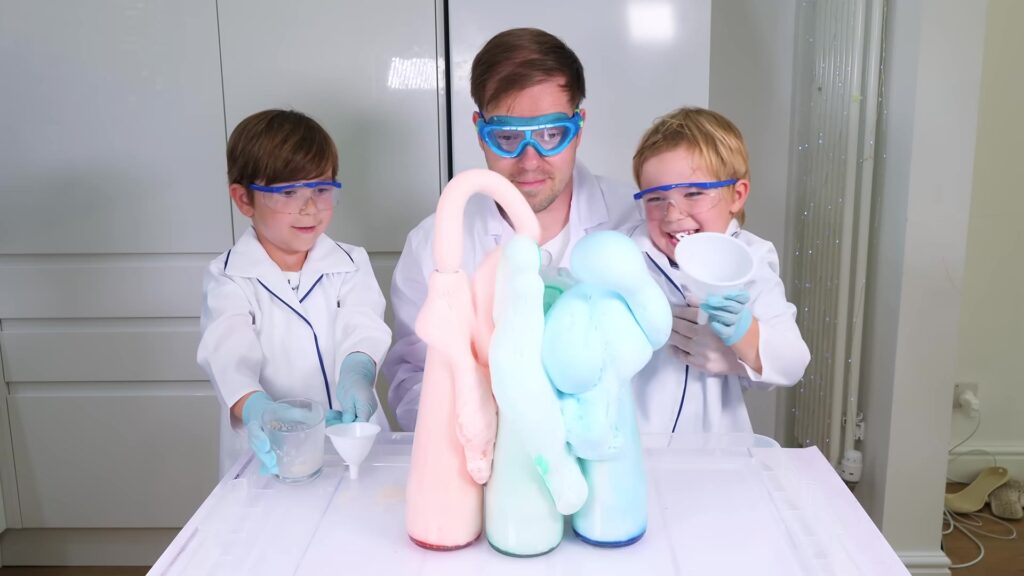
Elephant toothpaste is a huge, fast tower of foam you make by mixing hydrogen peroxide and washing-up liquid in a bottle, then pouring in yeast. The yeast makes the hydrogen peroxide break down into water and oxygen gas very quickly, and the soap traps the oxygen as foam, so it squeezes out of the bottle like toothpaste big enough for an elephant.
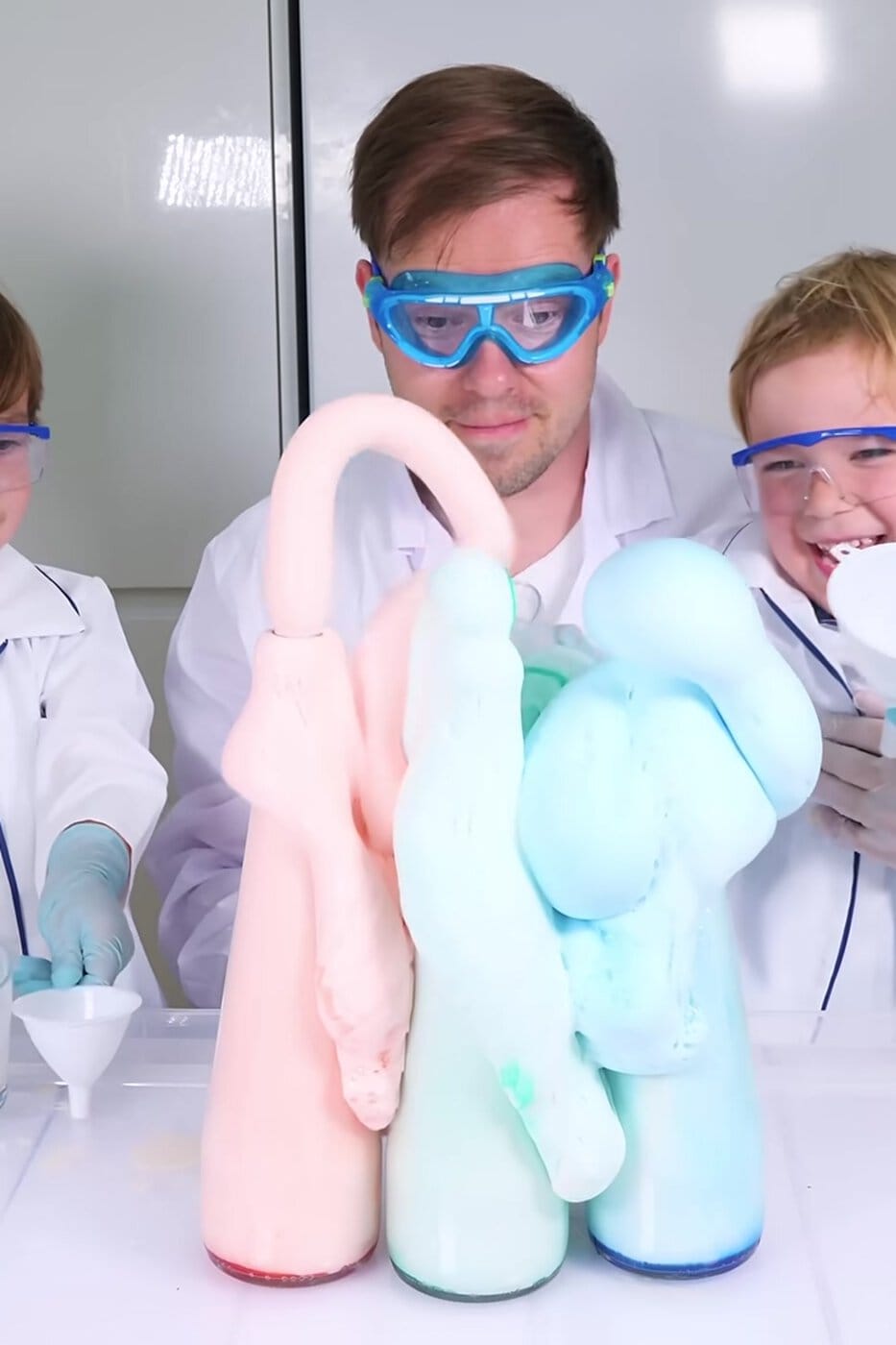
We made three bottles in three colours, and the pink one curled over like a trunk. It only takes a few minutes, and you need just five ingredients. Below we explain which hydrogen peroxide to buy (this decides how big your foam is), how to do it safely and why it sometimes doesn’t work.
List of Materials
These amounts are for one bottle. We made three bottles, one for each colour.
Hydrogen peroxide strength decides the size of your foam. We used 6%, also labelled “20 volume” or “20 vol”:
– UK: pharmacies sell hydrogen peroxide solution 6% (20 vols); it’s also sold as a liquid hair developer (not the thick cream kind). – US: pharmacies sell 3%; beauty supply shops sell 20 volume (6%).
3% works too, with a smaller, slower foam, so it’s the better choice for younger children. Don’t use anything stronger than 6% at home.
Any dried yeast from the baking aisle works (fast-action or active dry). The washing-up liquid is what turns the gas into foam, so don’t leave it out.
Hydrogen peroxide is a household chemical, and at 6% it can sting skin and badly irritate eyes. An adult handles and pours it.
- Safety glasses and gloves for everyone close to the bottle. In our video, Dad and both boys wore glasses, gloves and lab coats the whole time.
- Eyes: if any peroxide or foam gets in an eye, rinse it with plenty of clean, lukewarm water for at least 15 minutes and get medical advice.
- Skin: 6% can leave white, stinging patches on skin. Wash it off with soap and water.
- Never drink it, and the foam is not toothpaste. Nothing goes near mouths. Keep the hydrogen peroxide bottle out of reach before and after, and never leave it with children.
- The foam can still hold some hydrogen peroxide while fresh: touch it with gloves on (as our boys did), then wash hands.
- It gets warm, not hot. Let younger children watch rather than hold the bottle.
- Stains and bleach: food colouring stains, and hydrogen peroxide can bleach fabric. Use a tray, wear old clothes or an apron, and keep it away from carpets.
- Clean-up: scoop the foam into the sink and wash it away with plenty of water.
- Toddlers and preschoolers: try a baking soda and vinegar fizz instead.
Step by Step Instructions
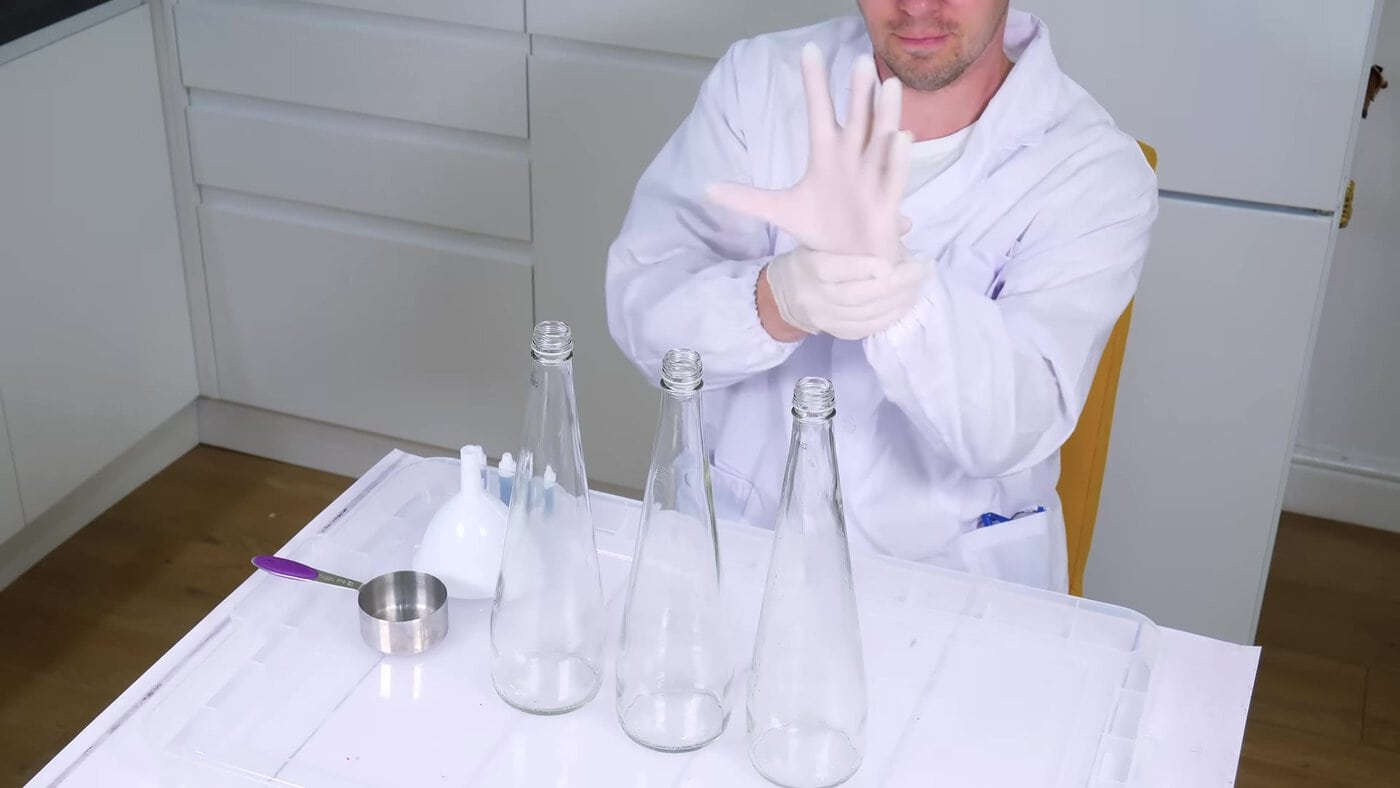
Put on safety glasses and gloves, and stand your bottle in the middle of a tray.
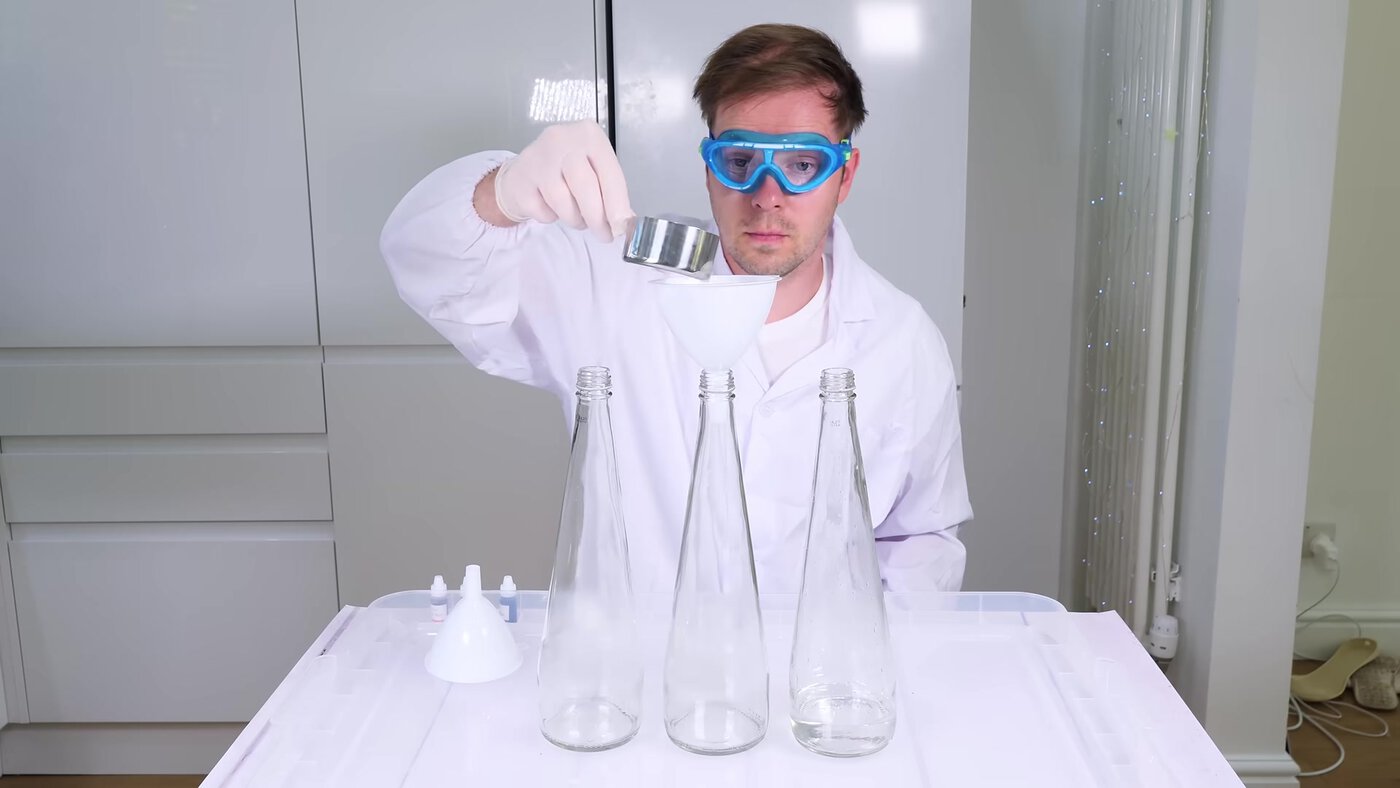
Adult: pour 1/2 cup of hydrogen peroxide into the bottle through a funnel.
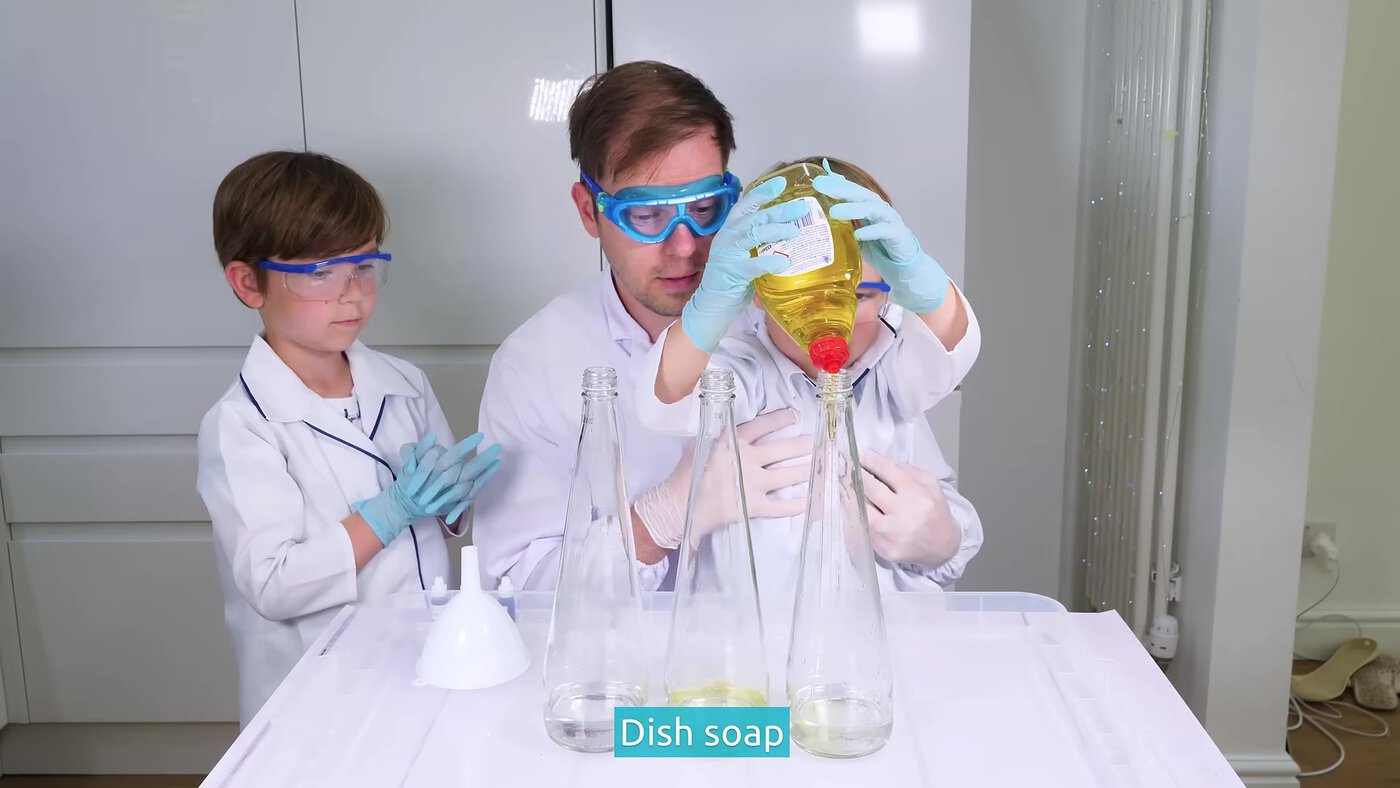
Squeeze a few good squirts of washing-up liquid into the bottle.
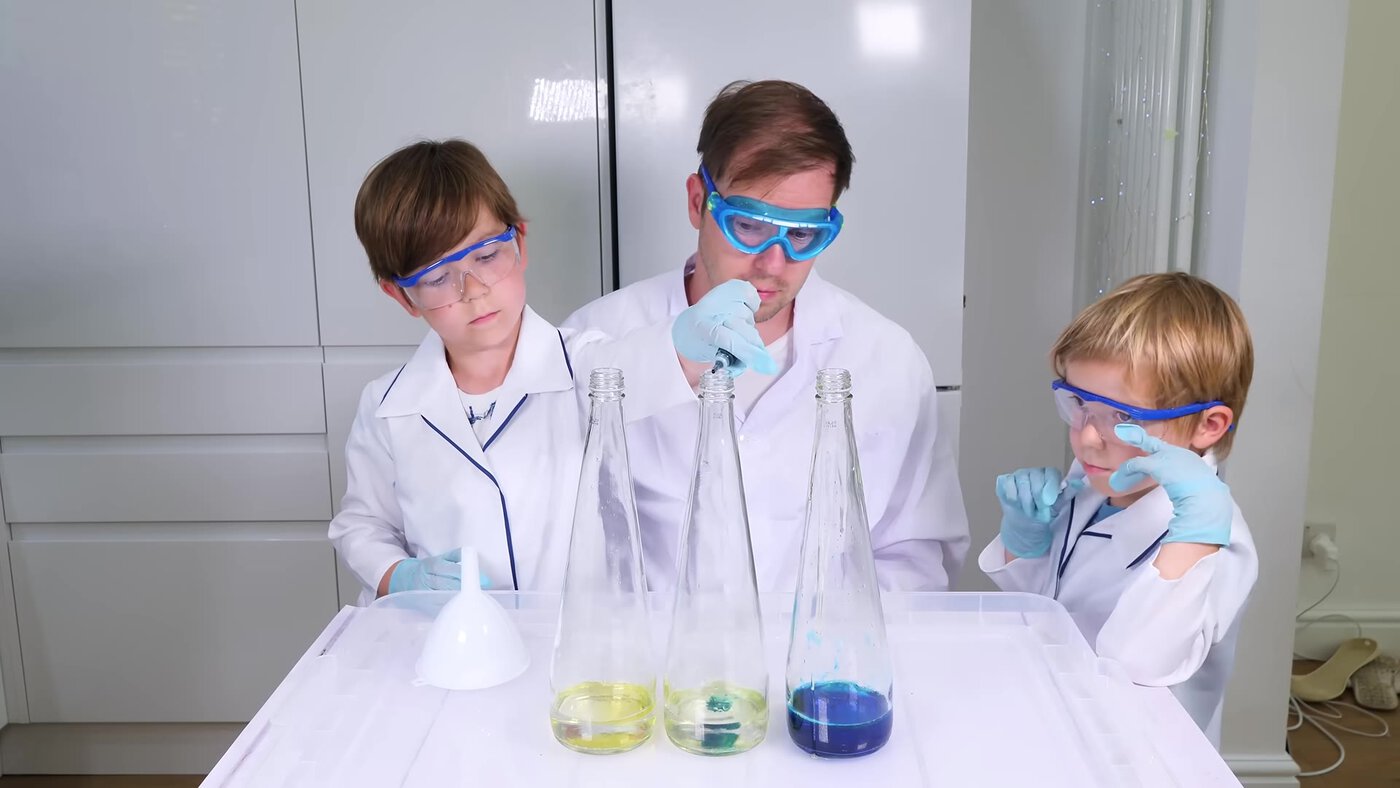
Add a few drops of food colouring, then swirl the bottle gently to mix.
Pour 1/4 cup of warm water into a small glass. Bath-warm is right: very hot water stops the yeast working.
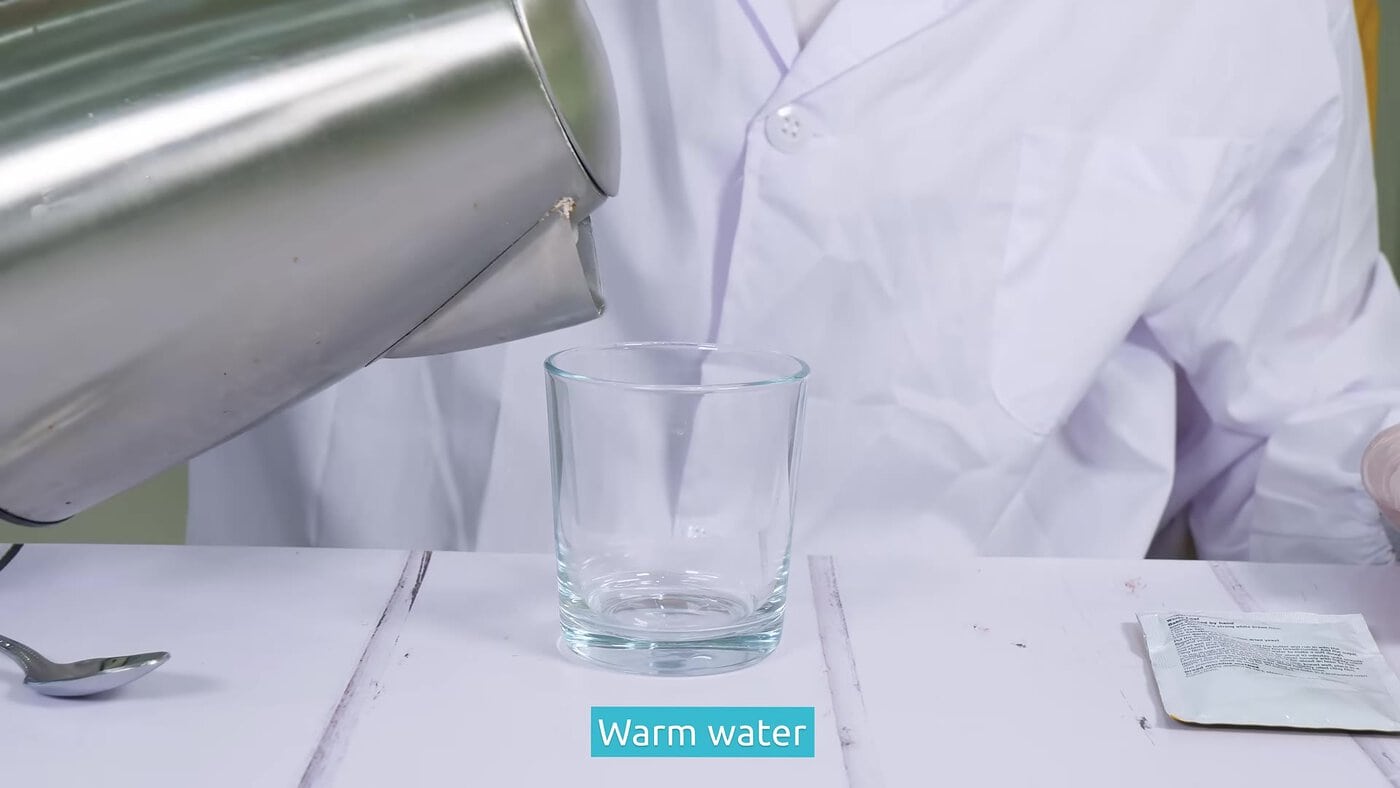
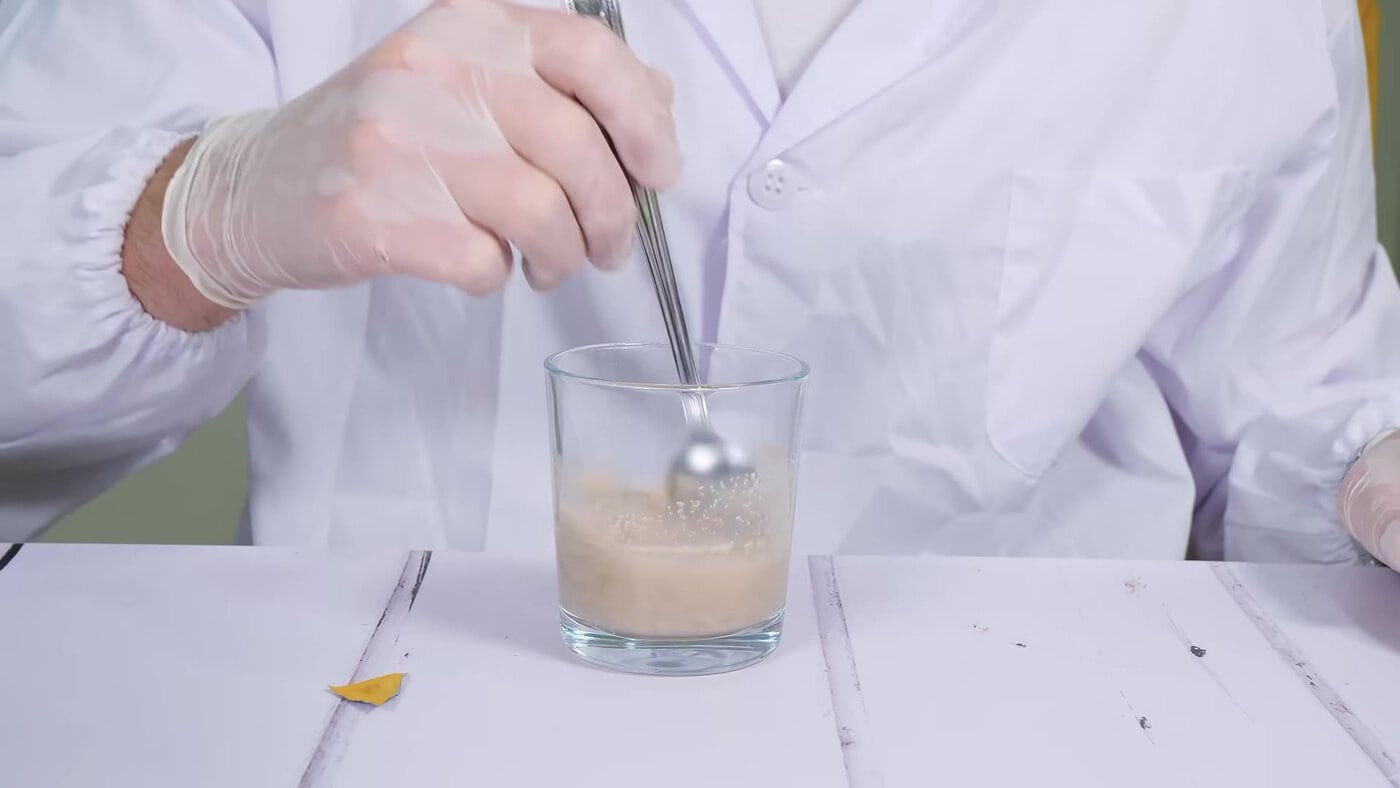
Tip in the packet of dried yeast and stir until it’s smooth and runny, with no lumps. Fresh yeast and bath-warm water give the biggest foam.
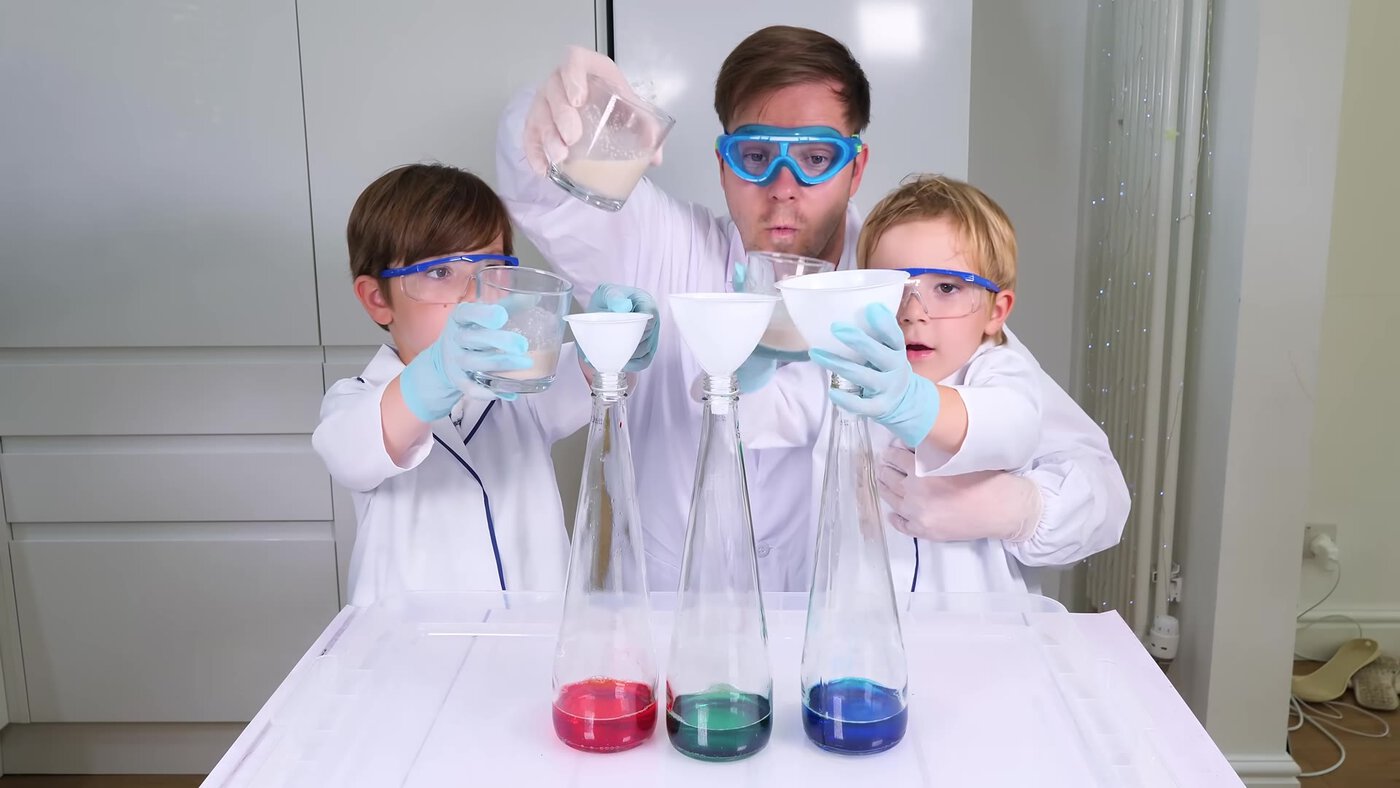
Put the funnel back in the bottle, pour in the yeast mixture, then lift the funnel out and step back.
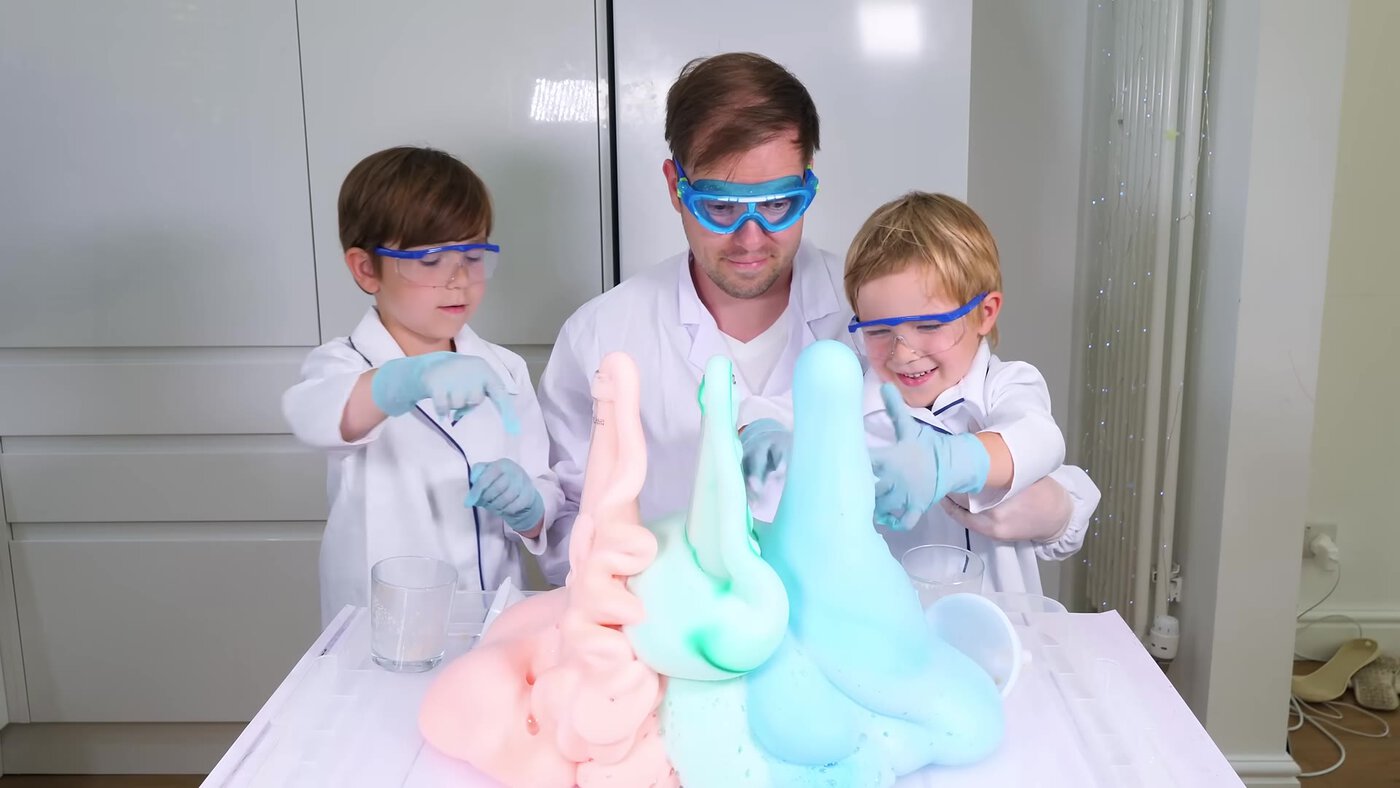
Watch the foam shoot up out of the bottle and pile onto the tray!
Video Tutorial for Elephant Toothpaste
Liked the colours? Our fireworks in a jar is another quick kitchen experiment that kids love to watch.
What Should Happen
The foam starts rising about 4 to 5 seconds after the yeast goes in, and within about 10 seconds tall columns push out of the bottle necks (that’s what happened with all three of ours). The colours turned paler as the foam filled with bubbles, so red became pink, green became mint and blue became light blue. One column bent over and curled like an elephant’s trunk.
The foam keeps coming for a while and spills onto the tray. Later the foam slowly settles into a softer, wetter pile.
The Science Explained
Hydrogen peroxide is always slowly falling apart. It’s a lot like water, but with one extra bit of oxygen. Left alone, it breaks down into plain water and oxygen gas very, very slowly. That’s why it’s sold in dark bottles: light makes it break down faster.
Yeast makes it fall apart super fast. Yeast is a tiny living thing (the same yeast that makes bread rise). Inside it is a special helper that grabs hydrogen peroxide and splits it into water and oxygen millions of times faster than it would happen on its own. The helper doesn’t get used up: it just keeps going.
The soap catches the gas. All that oxygen needs somewhere to go. Without soap it would just bubble out of the bottle. The washing-up liquid wraps each bit of gas in a thin, stretchy skin, the same way it makes bubbles in the sink. Millions of these bubbles together make foam, and there’s so much of it that the only way out is up through the narrow neck.
Why does it feel warm? Breaking hydrogen peroxide apart gives out a little heat. Lots of it breaking apart at once makes enough heat to warm the bottle.

Going Deeper Into The Science
The reaction is the decomposition of hydrogen peroxide:
2 H₂O₂ → 2 H₂O + O₂
Two molecules of hydrogen peroxide become two molecules of water and one molecule of oxygen gas. It is exothermic, giving out about 98 kJ of energy for every mole of hydrogen peroxide that breaks down, which is why the bottle warms up.
The yeast supplies the enzyme catalase. Living cells make hydrogen peroxide as a by-product, and catalase protects them by destroying it quickly. It’s one of the fastest enzymes known: a single catalase molecule can break down millions of hydrogen peroxide molecules every second. Like every catalyst, it speeds the reaction up without being used up itself. That’s why one packet of yeast is enough for a whole bottle.
How much gas is that? The “volume” number on hydrogen peroxide tells you. “20 volume” (6%) means one litre can release about 20 litres of oxygen. So our half cup (120 ml) can make roughly 2.4 litres of oxygen, about twenty times the volume of the liquid you poured in. 3% hydrogen peroxide is “10 volume”, so it makes half as much gas, which is why its foam is smaller.
The washing-up liquid contains surfactants: molecules with one end that likes water and one end that avoids it. They line up on the surface of the liquid, lower its surface tension and form thin films around the gas, so the oxygen is trapped as millions of small bubbles instead of escaping. A narrow bottle neck squeezes the growing foam into a column, which is how you get the toothpaste shape.
You’ll often see a much bigger version in videos and school demonstrations. It uses far stronger hydrogen peroxide (30% or more) and potassium iodide as the catalyst, sometimes called “devil’s toothpaste” (the version in many big YouTube demos). That version gets very hot and the chemicals can burn skin, so it’s for trained teachers and scientists only, not for home. In Great Britain you even need a Home Office licence to buy hydrogen peroxide stronger than 12%.
Troubleshooting
| Problem | Likely cause | What to try |
|---|---|---|
| Nothing happens, or only a few bubbles | Old yeast, or old hydrogen peroxide that has turned to water | Use a fresh packet of yeast and a bottle that hasn’t been open for months |
| A slow, small ooze | 3% hydrogen peroxide, or the yeast water was cold or too hot | That’s normal for 3%; use 6% (adult) for a bigger column, and mix the yeast with bath-warm water |
| Bubbles but no proper foam | Not enough washing-up liquid | Add a good squeeze more next time |
| The yeast is lumpy | It wasn’t stirred long enough | Stir until it’s smooth and runny before pouring |
| The foam spreads out instead of shooting up | The bottle neck is wide | Use a bottle with a narrow neck |
| The foam is everywhere | No tray | Always stand the bottle on a tray or in the sink |
Turn It Into a Science Project
Elephant toothpaste becomes a real experiment when you change just one thing and keep everything else the same. Ideas:
- Strength: 3% versus 6% hydrogen peroxide (adult pours).
- Yeast: half a packet versus a whole packet.
- Soap: no soap, a little soap or a lot of soap.
- Bottle shape: a narrow bottle versus a wide jar.
Predict first, then measure. Mark the bottle or stand a ruler behind it and film it on a phone, so you can pause and read how high the foam got and how long it took. Do each version twice. Older children can link it to catalysts and enzymes, which come up in secondary school chemistry and biology (KS3 and GCSE in the UK, middle and high school in the US).
Frequently Asked Questions
Can you make elephant toothpaste without hydrogen peroxide?
Not this reaction: the foam comes from hydrogen peroxide breaking down, so there’s nothing to swap it for. You can make a different, gentler foamy reaction with baking soda and vinegar, like our melting snowman experiment, but the foam doesn’t rise in the same way.