


-
 3-4 , 5-8 , 9-10
-
 5 to 20 min
-
 Easy
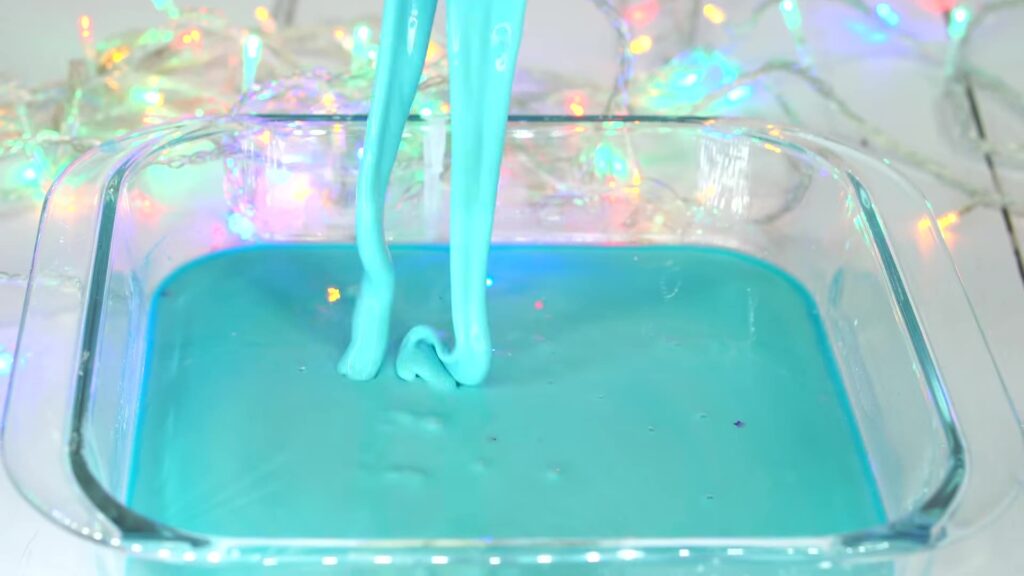
Christmas oobleck is cornflour and water, coloured icy blue and sprinkled with glitter. Squeeze a handful and it turns hard enough to roll into a snowball, but open your hand and it melts through your fingers like snow. That’s because oobleck is a non-Newtonian fluid: it acts like a solid when you push it hard and flows like a liquid when you go gently.
It’s a borax-free Christmas slime: there’s no glue, borax or slime activator in it, just two kitchen ingredients. It takes five minutes to make and keeps little hands busy for much longer.
List of Materials
The amounts don’t need to be exact: what matters is roughly 2 parts cornflour to 1 part water, measured with the same glass. If you prefer cups, 2 cups of cornflour to 1 cup of water is enough for a small dish; double it for a baking tray.
Finish by feel, because packets of cornflour vary a little. When it’s right, it feels hard if you tap it with a spoon but drips slowly from a lifted spoon.
Use cornflour, not plain flour: ordinary flour just makes a sticky paste. Some UK cornflour is made from wheat, so check the packet says maize if your child has a wheat allergy.
- Not food. Cornflour and water are kitchen ingredients, but the glitter makes this something nobody should eat. For toddlers who still put things in their mouths, leave the glitter out and stay close.
- Eyes. Keep messy hands away from eyes; if glitter or oobleck gets in, rinse with plenty of clean water.
- Slippery floors. Spills make hard floors very slippery: wipe them up straight away.
- Stains. Food colouring can stain hands, clothes and grout for a while, so play on a tray, wear old clothes and cover the table.
- Drains. Never pour oobleck down the sink (see How to Clean Up).
Step by Step Instructions
Tip the cornflour into the tray or dish.
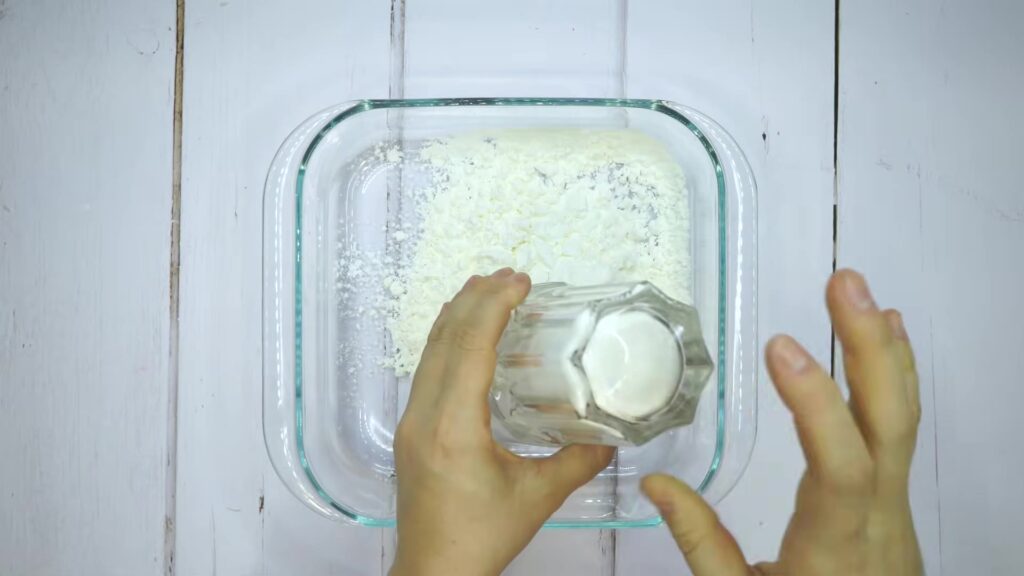
Add a few drops of blue food colouring to the water, then pour it over the cornflour.
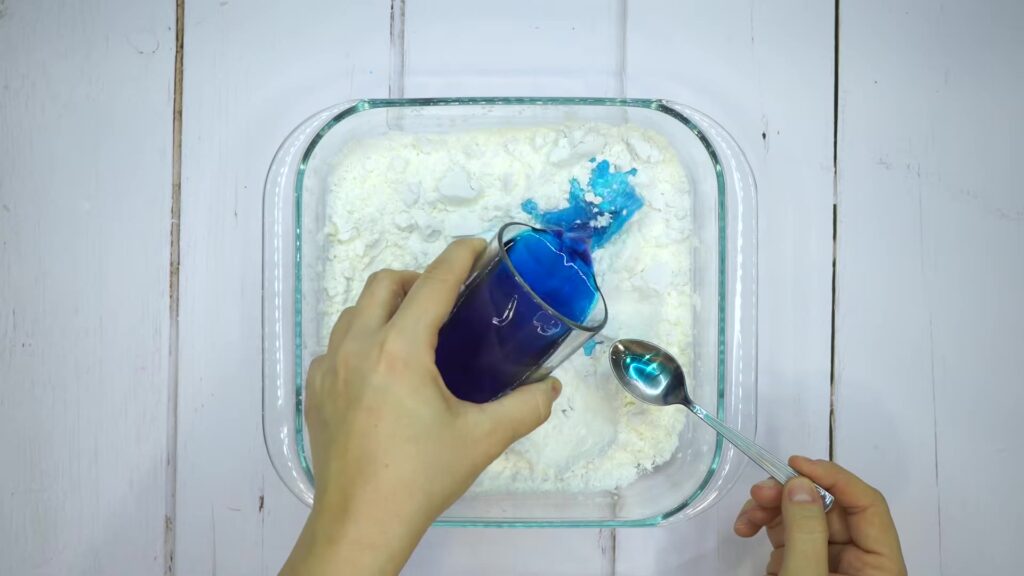
Stir with a spoon. It will feel stiff and lumpy at first: keep going.
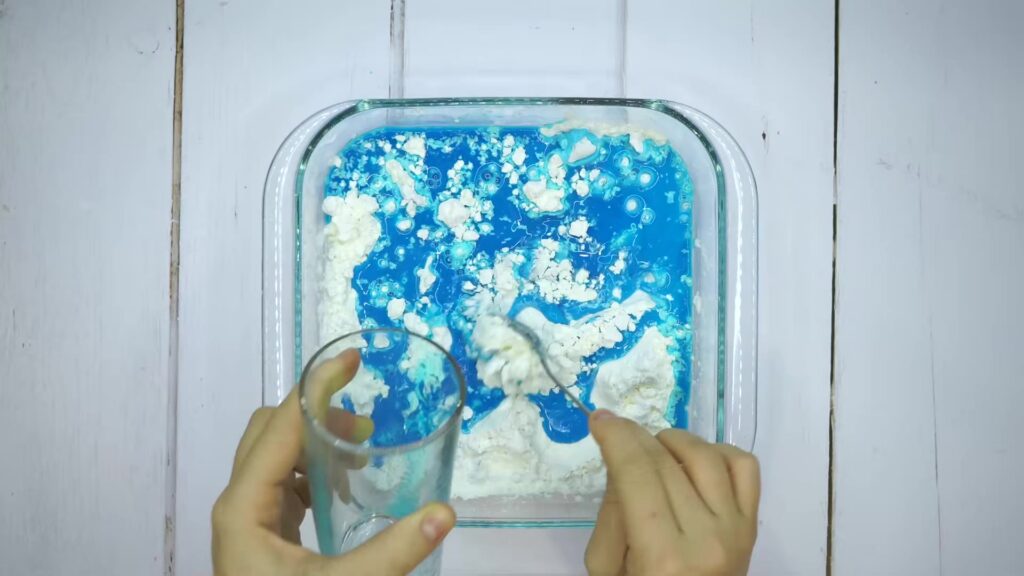
Sprinkle some glitter over the top.
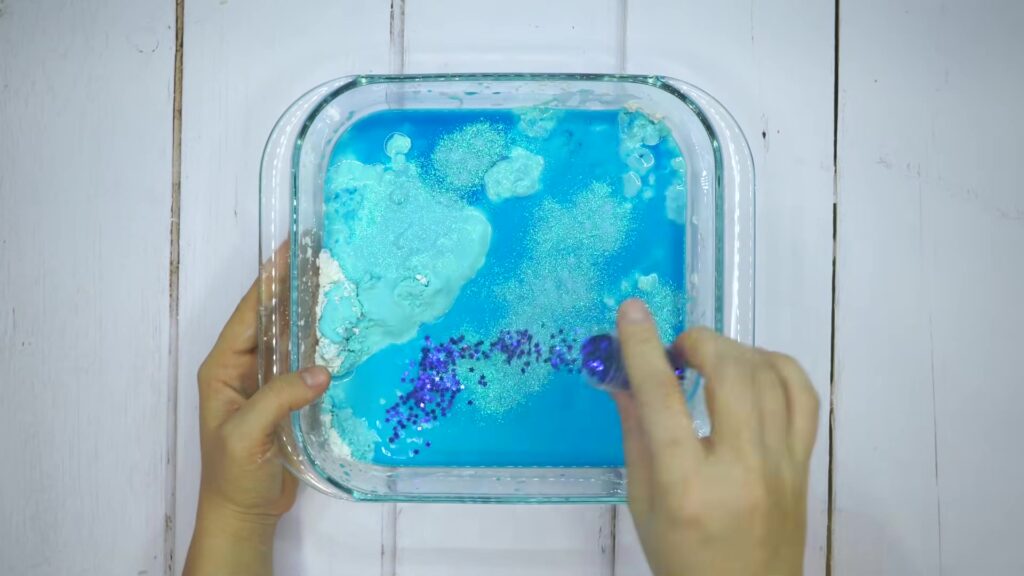
Swap the spoon for your hands and squish the mixture until it’s smooth and all one colour.
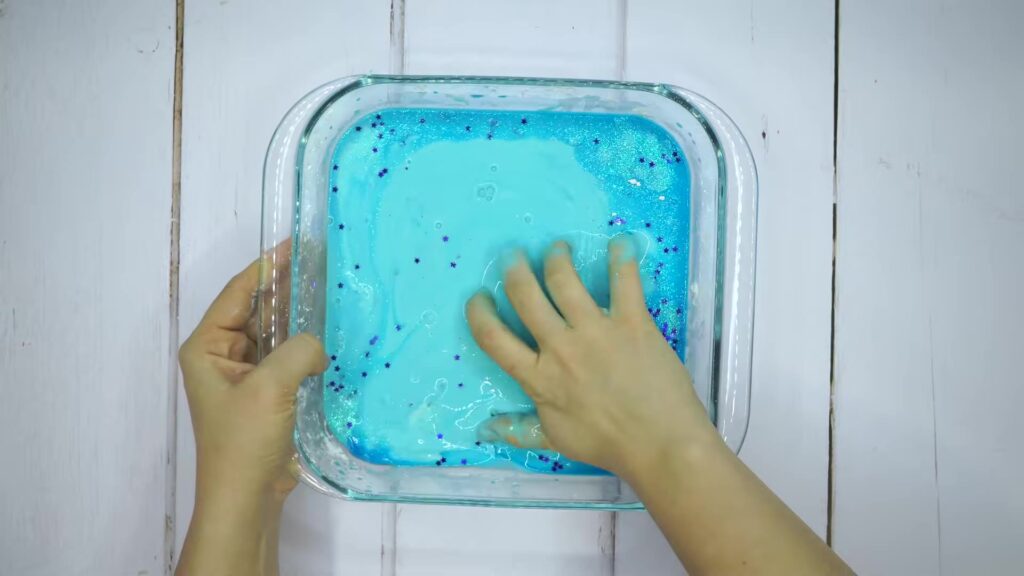
Scoop up a handful and squeeze it hard into a snowball. Then stop squeezing and open your hand.
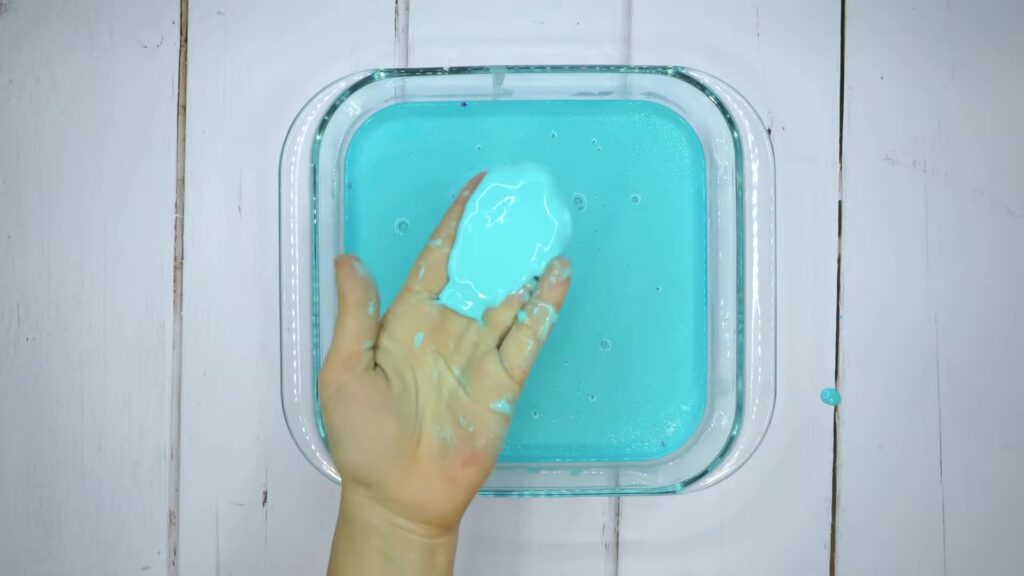
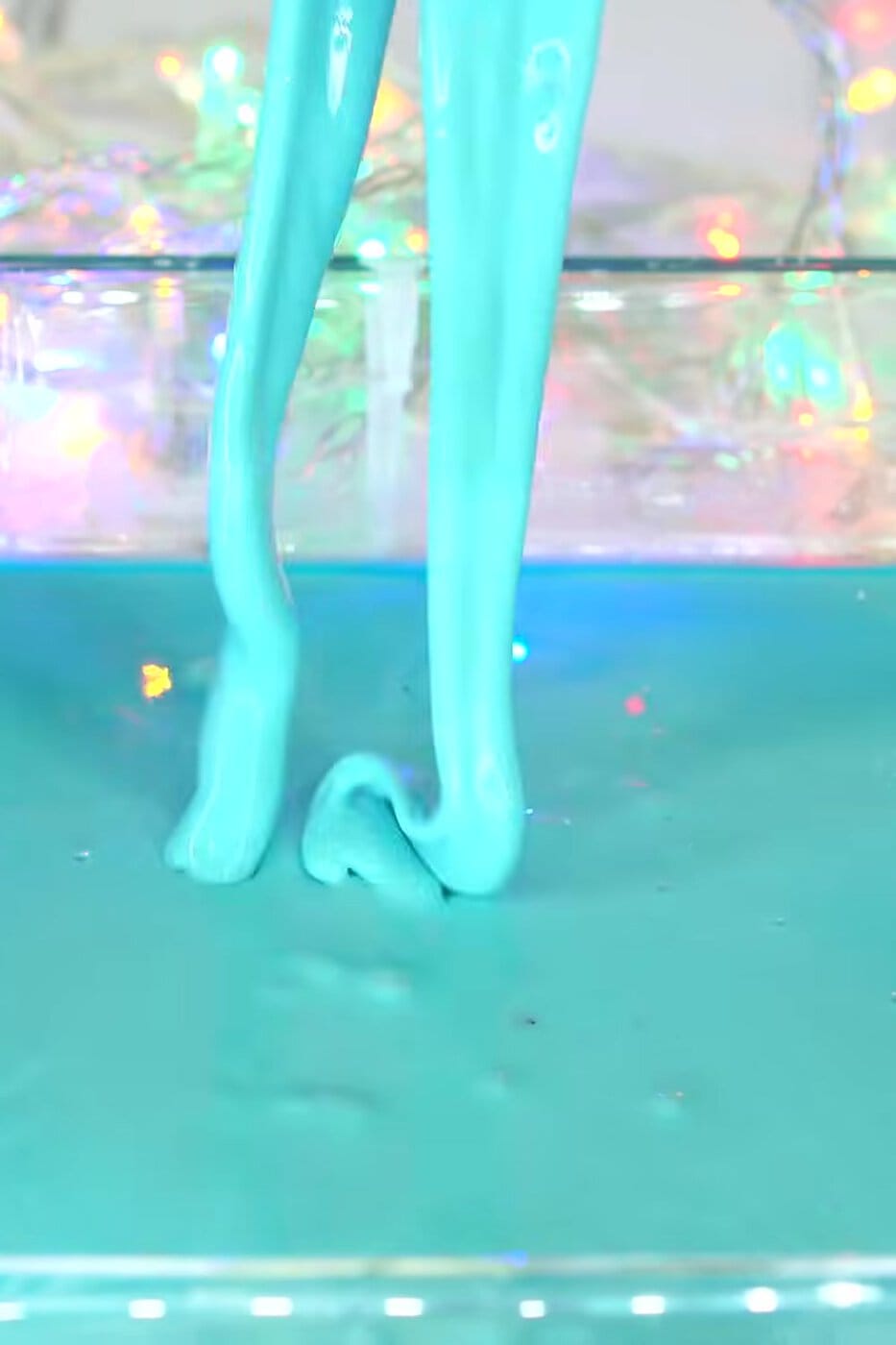
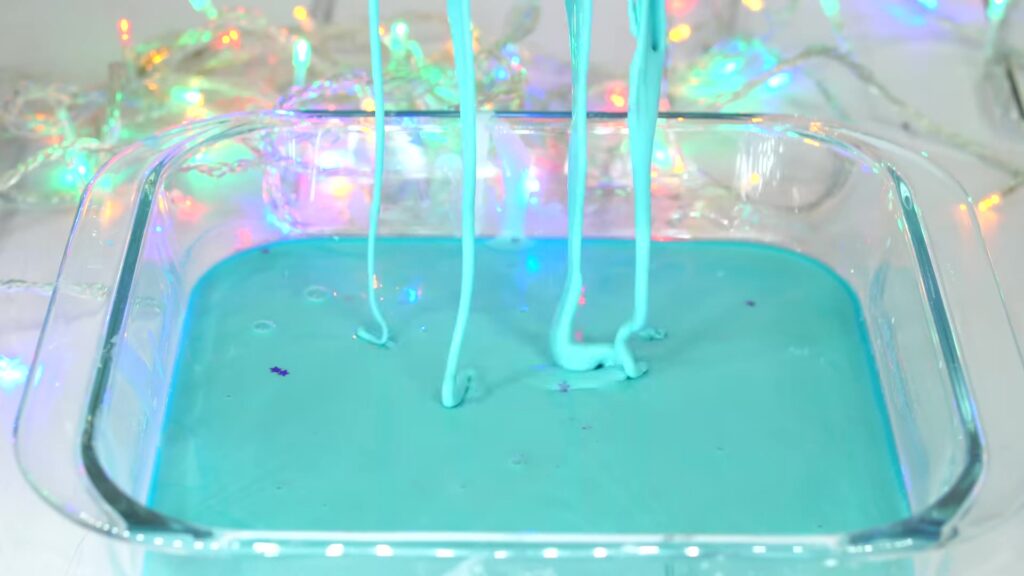
Lift a handful high above the dish, open your fingers and let it drip back in thick ribbons.
Drag a spoon quickly through the oobleck and watch the surface crack open behind it.
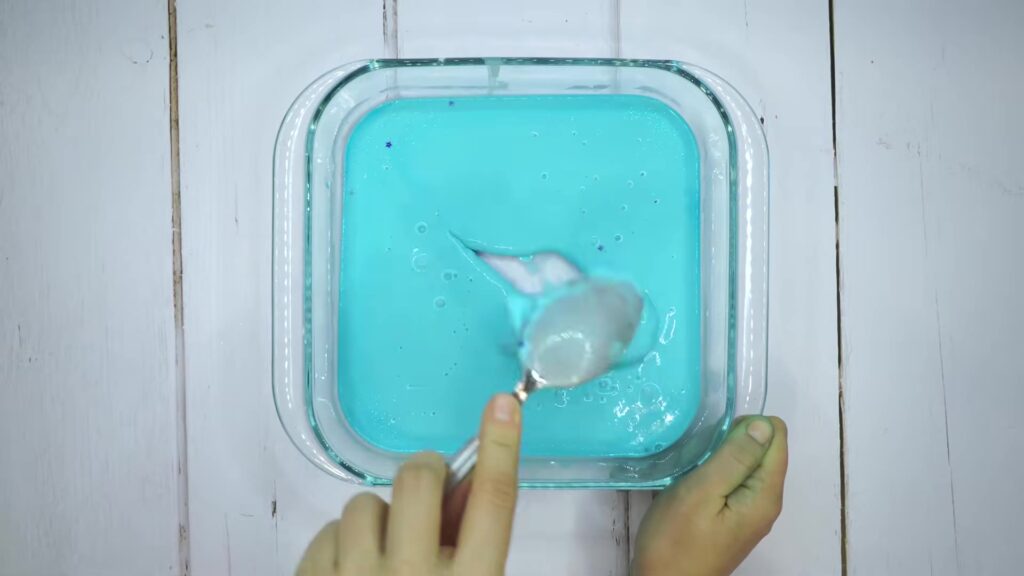
Scoop up a spoonful and lift it: the oobleck slides off the spoon and pours back like a liquid.
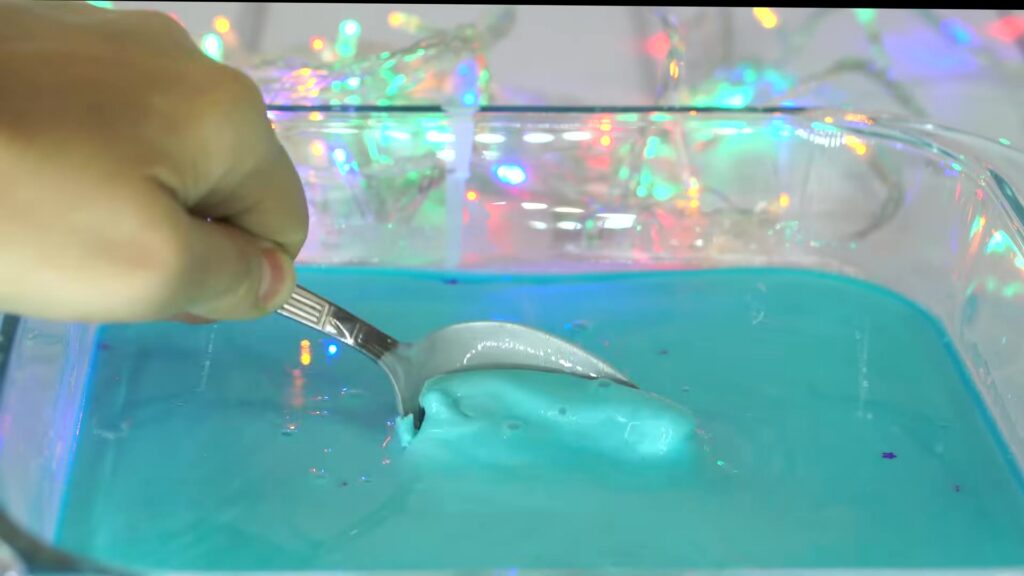
Video Tutorial for Christmas Oobleck
For more Christmas science, watch a melting snowman experiment fizz, or make frozen baking soda trees for a Christmas tree experiment.
What Should Happen
While you squeeze, the oobleck feels firm and dry on the outside, and you can roll it into a ball. The moment you stop, the ball goes shiny, slumps and runs out between your fingers: that’s the melting snow. A slow spoon or finger sinks in easily, but a quick tap feels like hitting something hard. Lift a spoonful and it pours off in thick ribbons.
The Science Explained
Cornflour doesn’t dissolve. Sugar and salt disappear into water, but cornflour doesn’t. It stays as billions of tiny grains, far too small to see, floating in the water.
Gently, it’s a liquid. When you move slowly, there’s time for the water to flow between the grains. The water works like oil, so the grains slide past each other and the mixture pours.
Hard and fast, it’s a solid. When you squeeze or hit it, you push the grains together faster than the water can get out of the way. The grains jam against each other, like a crowd of people all trying to get through a door at once, so the oobleck feels hard. Stop squeezing and the water seeps back in, the grains come unstuck, and the snowball runs away. It looks like melting, but nothing has warmed up.
It’s named after a book. The name comes from the Dr Seuss story “Bartholomew and the Oobleck”, where a strange green goo falls from the sky, a little like snow.

Going Deeper Into The Science
A Newtonian fluid, like water, has the same thickness however fast you stir it. Its viscosity (how much it resists flowing) stays the same. Oobleck is non-Newtonian: its viscosity changes with how hard and fast you push it. Because it gets thicker the harder and faster you push, it’s called shear-thickening, or dilatant.
Cornflour and water is a suspension. The starch grains are a few thousandths of a millimetre to a few hundredths of a millimetre across. At about 2 parts cornflour to 1 part water by volume, they’re packed so closely that they almost touch. At low speeds, a thin film of water keeps them apart and lubricates them.
Friction is the key. Under sudden force the water film is squeezed out of the gaps, and grains rub directly on one another. They form chains of contact through the mixture that carry the force, like the bones of a skeleton. This is called frictional jamming.
Why the surface goes matt. A packed heap of grains takes up slightly more room when it is sheared, an effect called dilatancy (it’s where the word “dilatant” comes from). The grains draw water in from the surface, so a squeezed ball looks dry and matt, then goes shiny again as the water comes back.
It isn’t quicksand or silly putty. Wet sand gets firmer when you squeeze it for a similar reason, but quicksand behaves differently. Silly putty bounces because of long, stretchy molecules, which oobleck doesn’t have. Slime made with glue and borax works by linking long molecules together too: it stretches, but it doesn’t turn hard when you punch it.
Where you meet shear-thickening in real life. Engineers have tested shear-thickening fluids in protective sports pads and in body armour, where the material stays soft as you move but stiffens on impact. People have even run across pools of cornflour and water in science demonstrations, as long as they keep running.
Make It More Christmassy
- Put a string of fairy lights behind the dish (battery lights, kept dry) for glowing “snow”.
- Hide small plastic snowflakes or a toy snowman in it to rescue with a spoon.
- Press a star cookie cutter in fast, then slowly, and compare.
- Make a red batch and a white batch and swirl them like a candy cane.
Troubleshooting
| Problem | Likely cause | Fix |
|---|---|---|
| Too runny, won’t go hard when squeezed | Too much water | Stir in more cornflour a spoonful at a time |
| Crumbly, cracks and won’t drip | Too little water | Add water a teaspoon at a time and mix by hand |
| Lumps of dry powder | Not mixed enough | Squish it with your fingers until smooth |
| Colour is patchy | Not mixed enough | Keep squishing it with your hands |
| It has gone hard after a while | Water has evaporated | Mix in a little more water |
Turn It Into a Science Investigation
Ask “Is it a liquid or a solid?” before you start, then test it: drop a small toy on the surface, then push it in slowly. Which one sinks? The dropped toy pauses on top before it sinks slowly; the pushed one slides straight in. For older children, make a fair test by changing only the water. Mix the same amount of cornflour with three different amounts of water and see which mix makes the best snowball. In England, solids, liquids and gases are taught in Year 4 science, and oobleck is a fun way to show that some materials don’t fit neatly into either group.
How to Clean Up
Don’t pour oobleck down the sink: the cornflour settles in the pipes and can block them. Leave the tray out until the oobleck dries, then scrape the powder into the bin, or scoop it into a bag for the general rubbish bin. Dried oobleck brushes off clothes and floors, and the rest washes off hands and tables with warm water. Wipe up glitter with a damp cloth.
Frequently Asked Questions
How long does Christmas oobleck last?
It’s best on the day you make it. Covered, it keeps for a day or two; stir in a splash of water if it has dried out. Throw it away if it smells sour or grows mould.
Can you make oobleck without cornflour?
Yes: potato starch works in much the same way. Baking soda and icing sugar don’t give the “hard when you squeeze” effect.