

-
 3-4 , 5-8 , 9-10
-
 5 to 20 min
-
 Easy
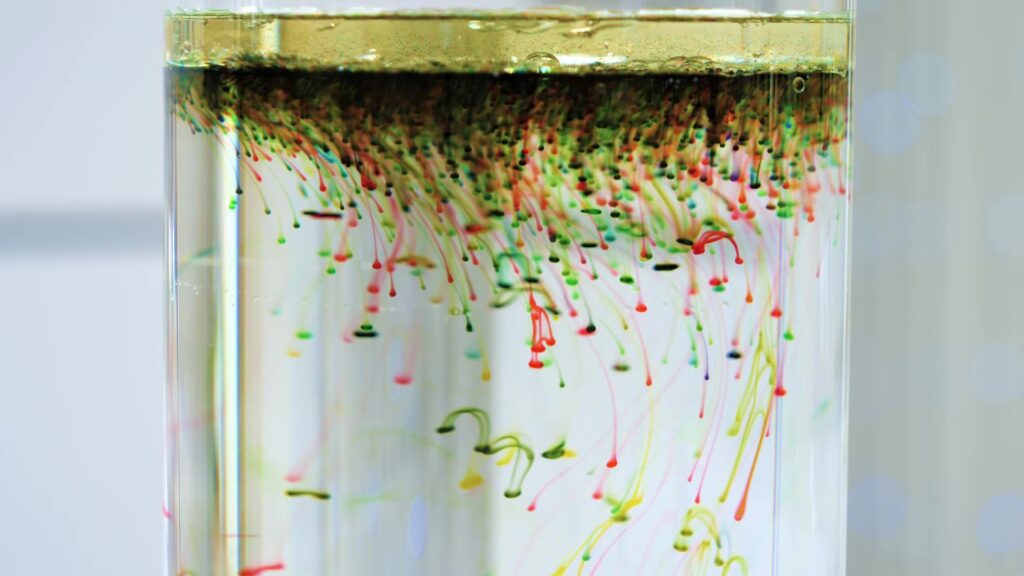
Table of Contents
It’s mesmerising to watch the colour patterns form in this experiment! All you need is water, cooking oil and food colouring, and a minute to set it up. Tiny beads of colour sink through a layer of oil, then burst into the water below in trails that look just like underwater fireworks. It’s a quiet, fire-free firework display that is perfect for Bonfire Night, New Year’s Eve or the Fourth of July, and it gives kids a hands-on way to see why oil and water don’t mix, what density means, and how colours spread through water. You might also see it called fireworks in a glass, water fireworks or the oil, water and food colouring (food coloring) experiment: they’re all the same activity.
List of Materials
You need water-based liquid food colouring: the ordinary bottles sold for baking and icing. Check the label: if the ingredients start with water, glycerine or propylene glycol, it’s water-based. Colourings labelled “oil-based”, “candy colour” or “for chocolate” mix into the oil instead and won’t make fireworks. Not sure? Put one drop into a spoonful of oil: if it stays a round bead, it’s water-based and perfect. Gel or paste colouring is water-based too, but it’s very thick, so thin it with a few drops of water first. Any pale, runny oil is fine: baby oil is the clearest, while extra-virgin olive oil is greenish and harder to see through. Pick colours that still look nice when they mix, such as red and yellow or blue and yellow. Red, blue and green together quickly turn the water a muddy brown.
Step by Step Instructions
Fill a tall glass or vase about three-quarters full with water. Room-temperature or warm tap water both work.
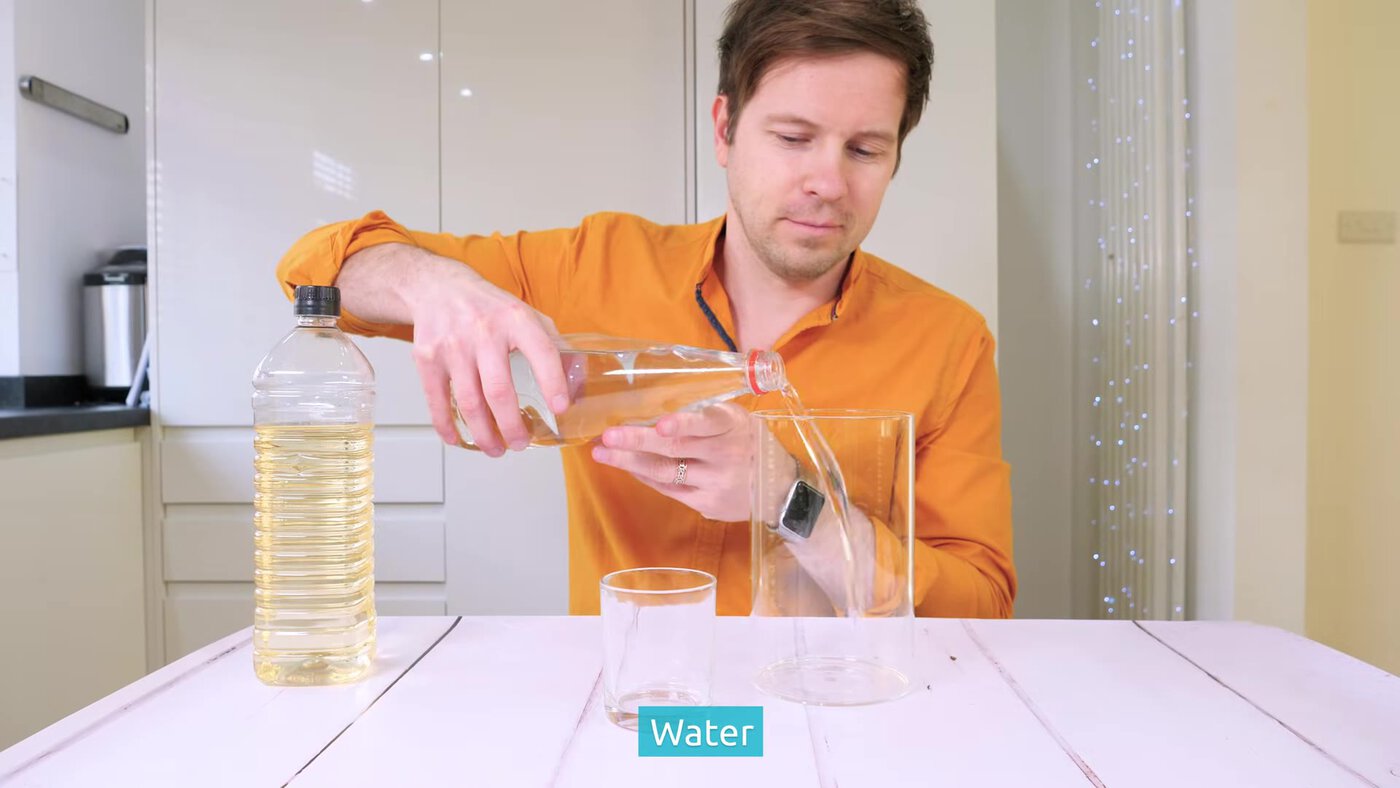
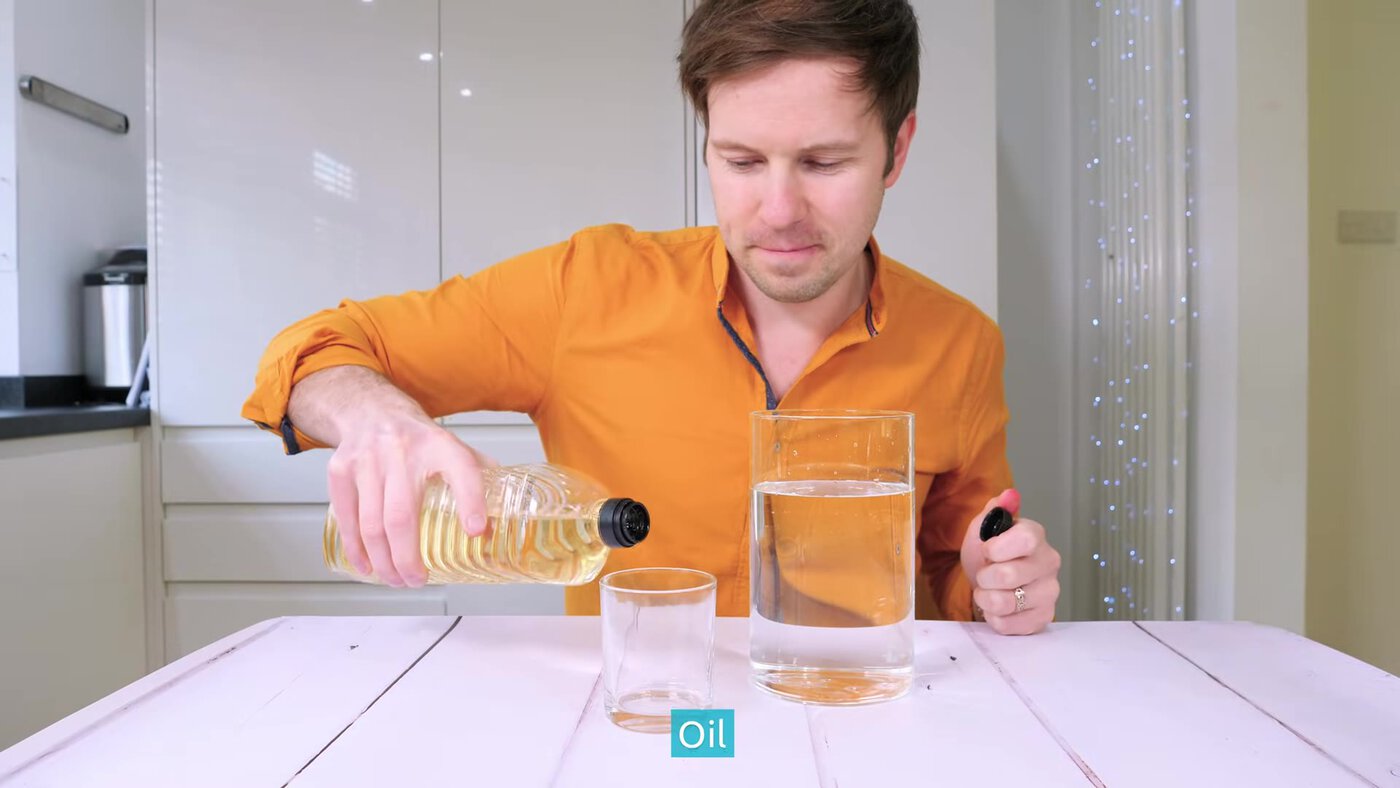
Pour 3–4 tablespoons of oil into a small glass. In an average glass this makes a layer about 1 cm deep on top of the water.
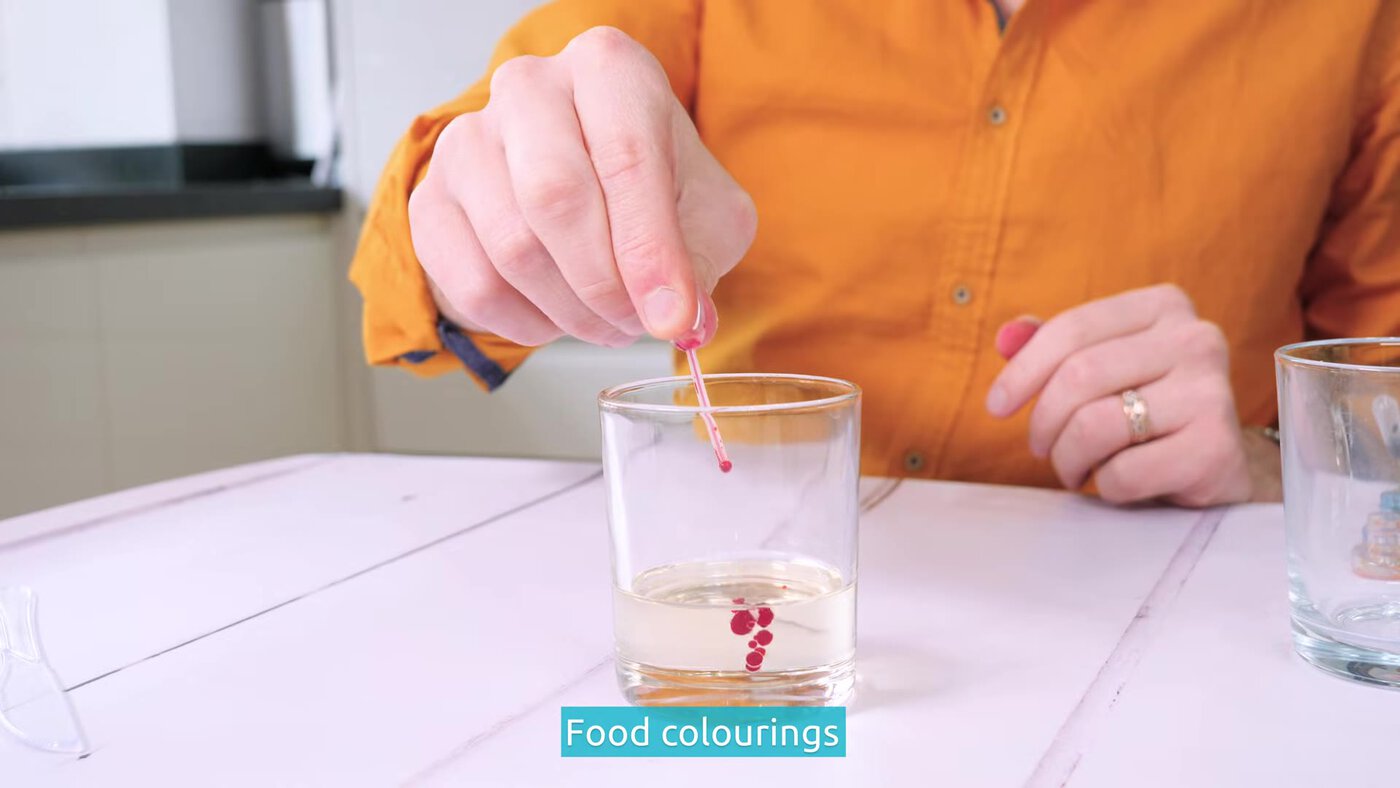
Add 3–4 drops each of two or three food colourings to the oil. Notice how the drops stay as round beads instead of mixing in!
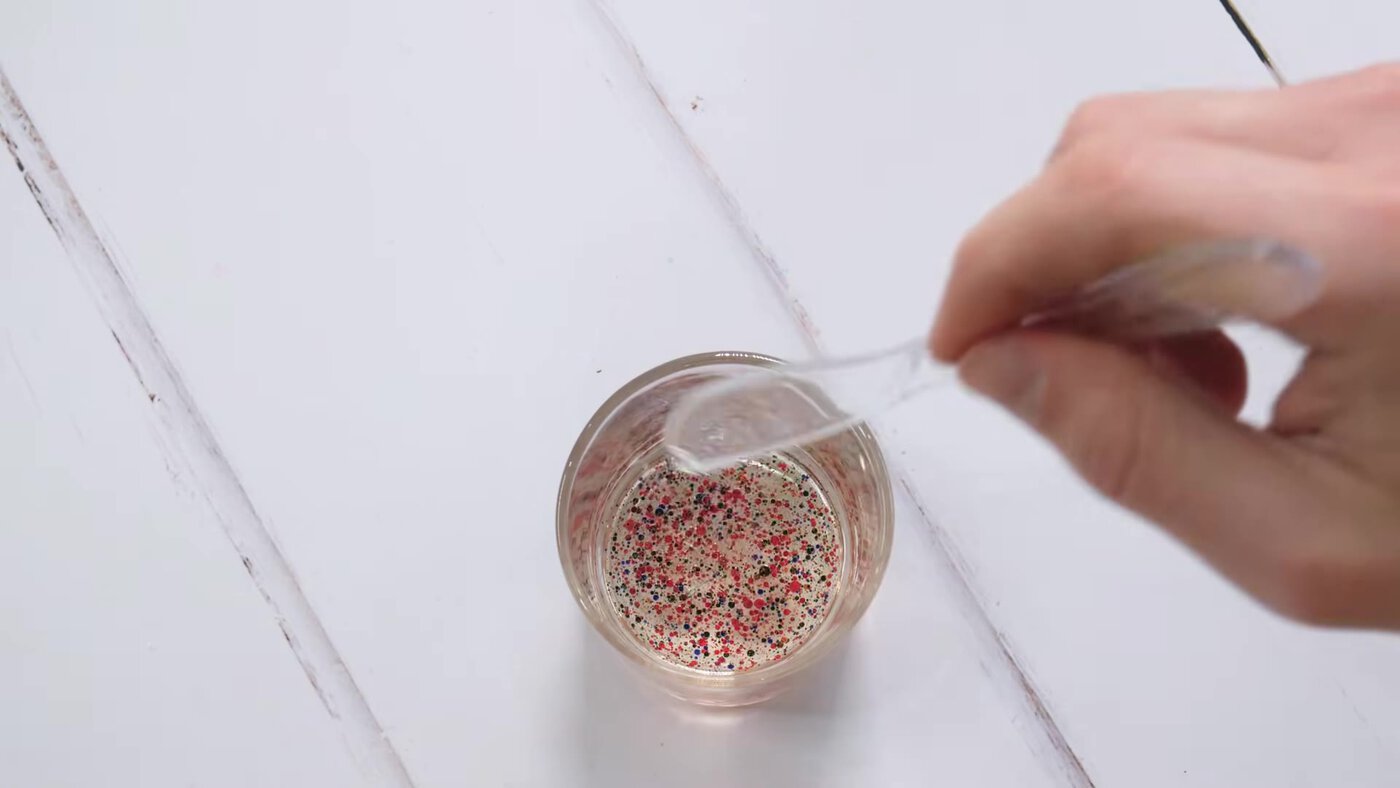
Gently stir with a fork or teaspoon until the colour breaks into lots of tiny beads. Stop as soon as they are small: whisking hard makes the oil cloudy.
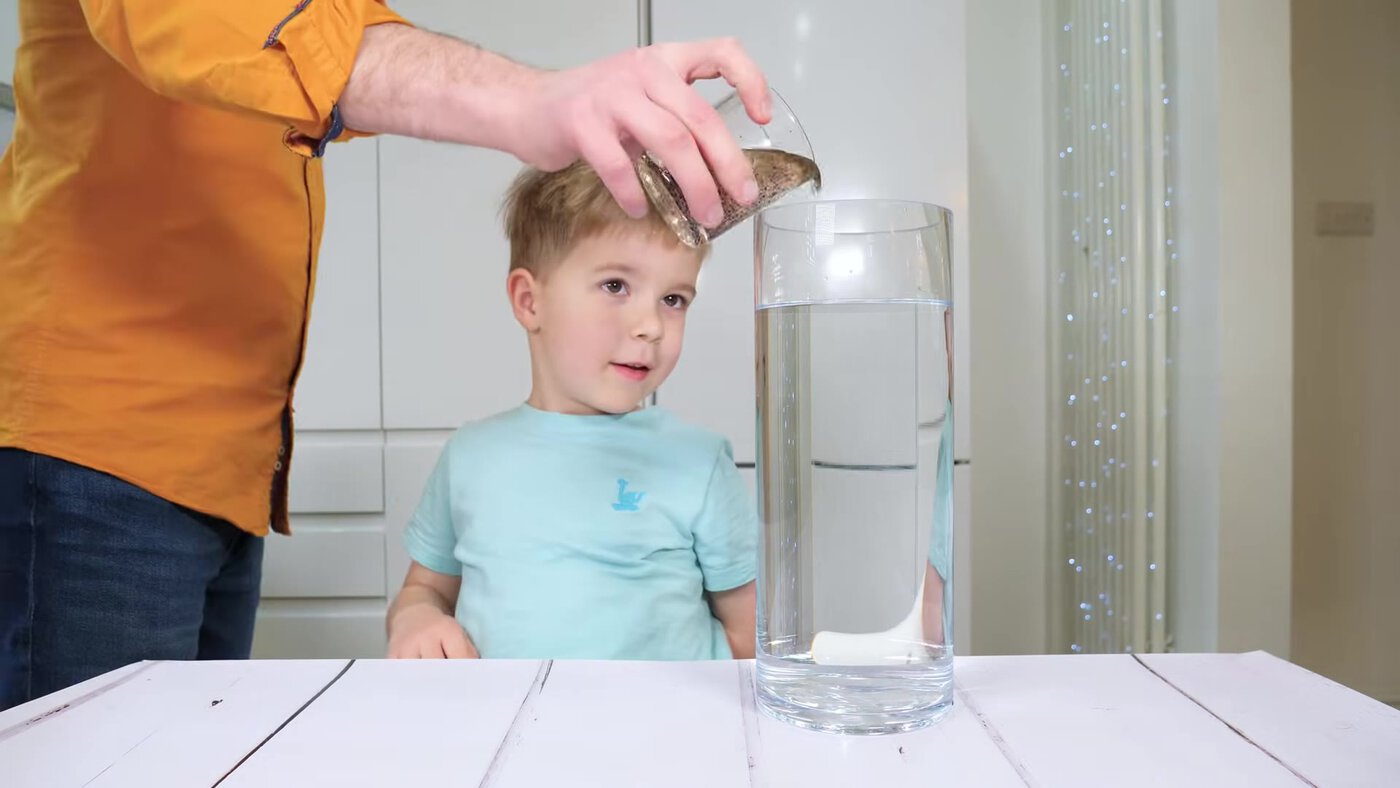
Slowly pour the oil and colour mixture onto the water. The oil spreads into a layer on top, carrying the coloured beads with it.
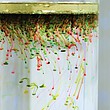
Watch from the side. Within a minute, the first beads sink through the oil and burst into the water as colourful trails.
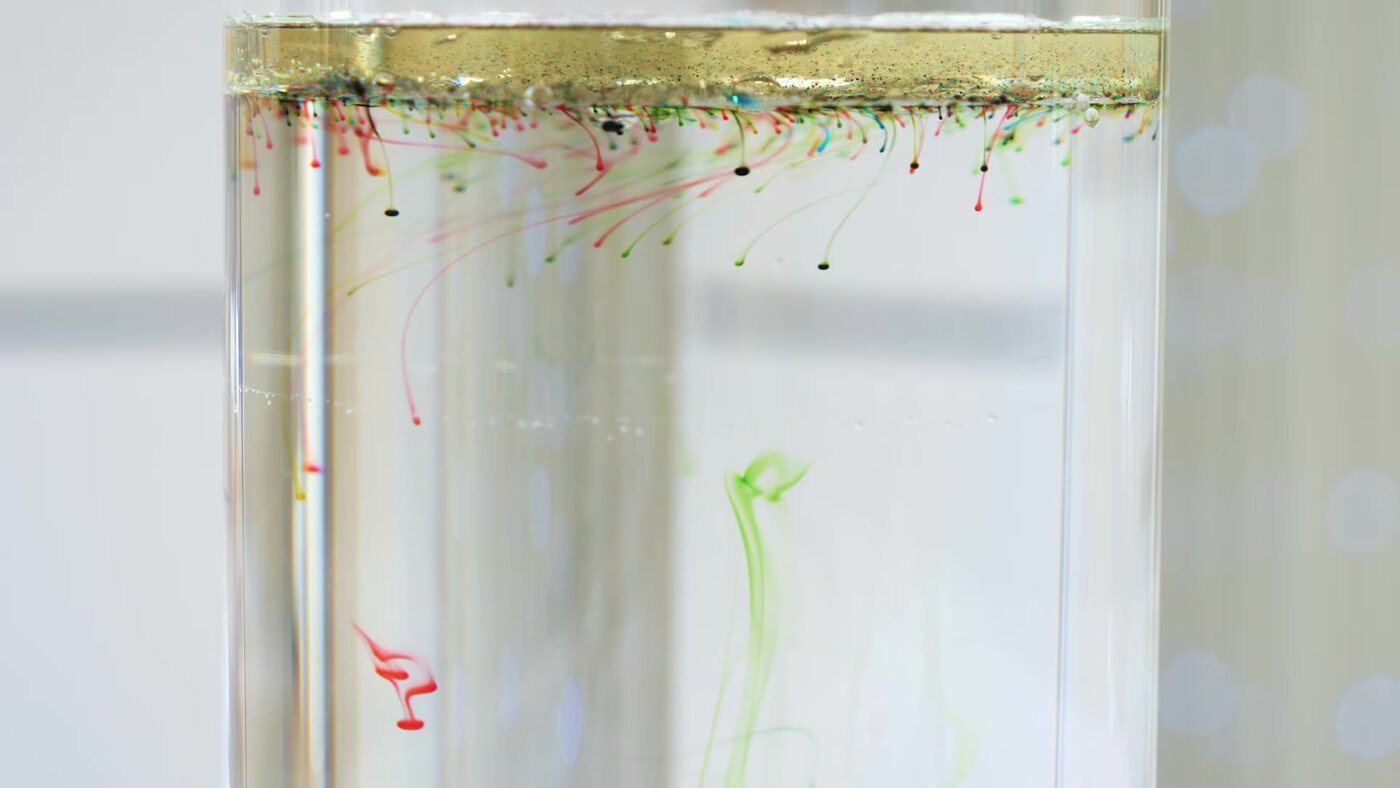
Sit back and enjoy the show! More fireworks fall over the next few minutes, until eventually the whole jar turns one colour.
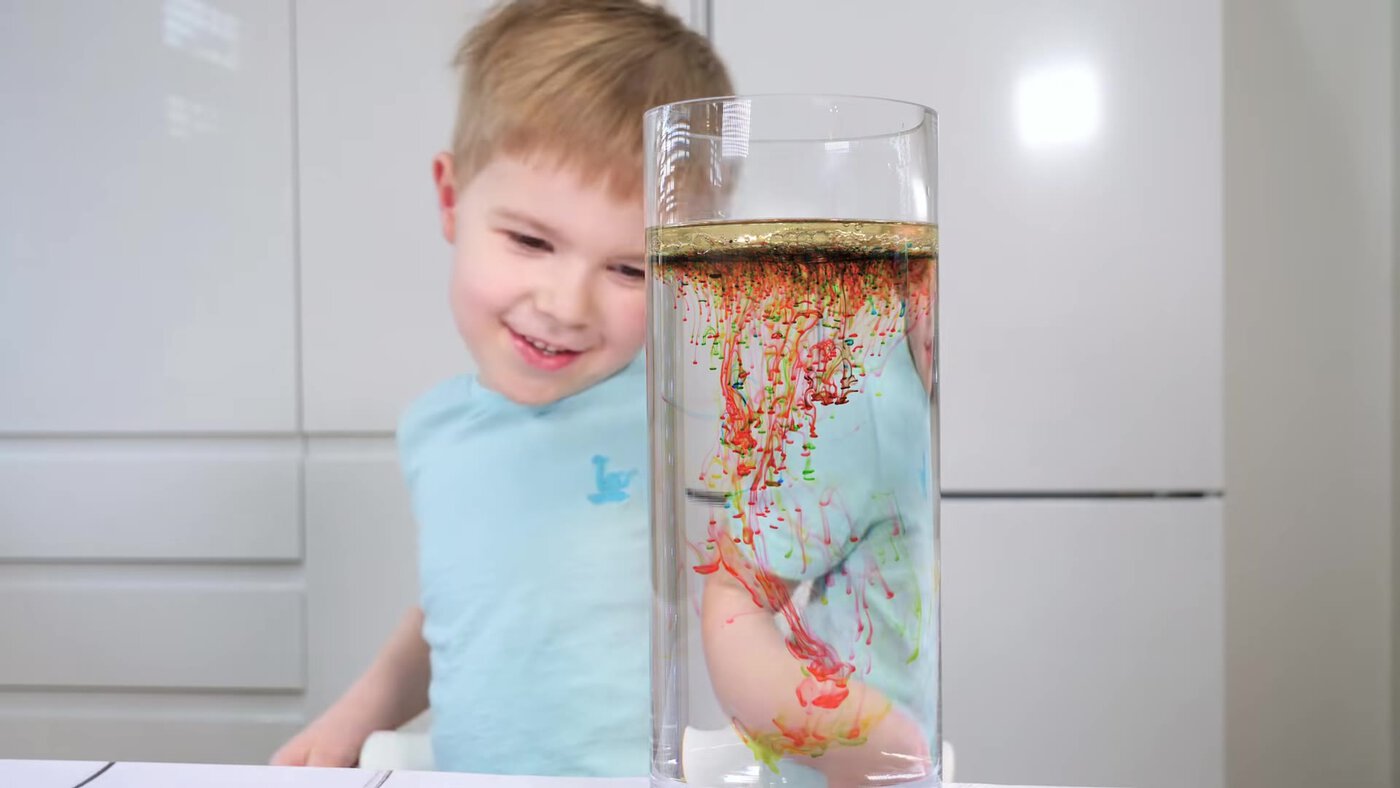
Video Tutorial for Fireworks in a Jar
If your kids loved this, try our 8 layer density column or the rainbow density tower next.
The Science Explained
Here’s what is happening, in simple words.
Oil and water don’t mix. However hard you stir, they always split into two layers again. Water likes to stick to water much more than it sticks to oil, so the oil gets pushed out of the way.
The oil floats on top because it is lighter than water for its size. A cup filled with oil weighs a little less than the same cup filled with water. Scientists say oil is less dense than water, and less dense things float on more dense things.
Now the food colouring. The ordinary liquid food colouring you buy for baking is water-based: it is mostly water with colour mixed in. Because it is watery, it won’t mix with the oil. That’s why your drops stayed as little round beads when you put them in the oil.
The coloured beads are heavier than the oil, so they slowly sink through it. When a bead reaches the water underneath, it finally meets something it can mix with. Pop! It joins the water and the colour streams downwards, like a firework falling through the night sky.
The colour keeps sinking because coloured water is a tiny bit heavier than plain water. Each bead pops at a slightly different time, so you get lots of fireworks one after another. That’s why stirring with the fork matters: it turns a few big drops into lots of tiny beads, and lots of beads means lots of fireworks.
What if your food colouring is oil-based? Some colourings, often sold for colouring chocolate, are made to mix with oil and fat. They spread straight into the oil layer, turn it one colour and never reach the water, so there are no fireworks. That’s why you need the water-based kind.
Nothing new is made in this experiment, so it isn’t a chemical reaction. The oil, water and colour just move around. Scientists call this a physical change.

Going Deeper Into The Science
Let’s look more closely at why oil and water separate. In a water molecule (H₂O), the oxygen atom pulls the shared electrons towards itself, so it carries a slight negative charge, while the two hydrogen atoms carry a slight positive charge. These small charges let neighbouring water molecules attract each other through hydrogen bonds. Oil molecules are mostly long chains of carbon and hydrogen with their charge spread almost evenly, so they are non-polar and can’t join in. Water molecules attract each other far more strongly than they attract oil, and the result is two separate layers. Chemists call liquids that won’t mix like this immiscible, and the rule of thumb is “like dissolves like”.
Density is the mass packed into a certain volume. Here are some typical densities, in grams per cubic centimetre (g/cm³): water is about 1.00, sunflower or vegetable oil about 0.92, and baby oil (mineral oil) about 0.83–0.87. So a cup of vegetable oil weighs about 8% less than the same cup of water. Notice that oil is thicker than water but less dense. Thickness (viscosity) and density are different properties, which surprises a lot of people!
“Like dissolves like” also explains the difference between water-based and oil-based food colouring. The dyes in ordinary liquid colouring, such as Allura Red (E129), Tartrazine (E102) and Brilliant Blue (E133), are salts: their molecules carry electric charges, so they dissolve happily in polar water and hardly at all in oil. The liquid is water with a little glycerine or propylene glycol added, which makes it slightly denser than plain water. Oil-based colourings are made for chocolate and buttercream, where water would cause problems. They either use colours that dissolve in fat or carry the colour in an oily base, so they go straight into the oil layer. Turmeric is a natural example: its yellow pigment, curcumin, dissolves in oil much better than in water.
Why do the beads pause at the boundary between the oil and the water? Where two liquids that don’t mix meet, there is a kind of skin caused by interfacial tension. It pulls each droplet into a sphere. When a bead arrives at the boundary, a very thin film of oil is still trapped underneath it. The bead can only touch the water and merge into it once that film has drained away, which can take anything from a moment to half a minute. Nudging the bead, or two beads bumping into each other, breaks the film sooner.
The firework trails themselves are caused by the slightly denser coloured water sinking and swirling through the clear water, a bit like a tiny weather system. Scientists call this kind of movement convection. Diffusion, where dye molecules spread on their own from where there are lots of them to where there are fewer, is surprisingly slow. Spreading just one millimetre this way takes around a quarter of an hour, and on its own it would take many months to colour a whole glass evenly. It mainly softens the edges of the trails. Most of the mixing you see is done by currents: the sinking colour itself, and small temperature differences in the water.
Temperature changes the show. Warm water and warm oil are runnier, so the beads sink faster, and the colour spreads and mixes faster. Cold water slows everything down, which can give longer, crisper trails. Very hot water sets up strong currents that blur the colours almost instantly.
What about the colours? Each dye absorbs some colours of light and lets others through. When blue and yellow dyes overlap, the blue dye absorbs most of the red and the yellow dye absorbs most of the blue, so mainly green light reaches your eyes. Mix too many dyes and almost all the light gets absorbed, which is why the water can end up brown or nearly black.
You can see the same science all around you. Oil and vinegar salad dressing separates into layers after you shake it. Oil spills float on the sea, which is why they can be skimmed off the surface. And we need washing-up liquid to clean greasy pans, because soap molecules have one end that likes water and one end that likes oil, letting them grab the grease and carry it away.
How Long Does It Last?
- 0–1 minute: the oil settles into a layer and the beads start sinking through it.
- 1–5 minutes: the main firework show, with beads bursting into the water one after another.
- 5–30 minutes: the colour collects at the bottom of the jar and slowly creeps up through the water.
- After several hours (often overnight): the water is close to one even colour and the clear oil sits on top. Moving the jar speeds this up.
Tiny beads give the longest show. One home tester found that big drops broke through the oil in under a second, while fork-broken beads waited 20–40 seconds each before bursting.
Troubleshooting: Why Didn’t My Fireworks Work?
| Problem | Likely cause | Fix |
|---|---|---|
| The water turned black or murky in seconds | Too many drops or too many colours | Use 3–4 drops each of 2–3 colours that mix well, such as red and yellow |
| The colour sank as one big blob | The drops weren’t broken up | Stir with a fork until you see lots of small beads |
| No beads formed, just a smear | Gel or paste colouring | Use liquid food colouring, or thin the gel with a few drops of water |
| The oil went cloudy | Stirred too hard | Stir gently. If it’s cloudy, let it stand for a minute before pouring |
| Beads are stuck at the bottom of the oil | Interfacial tension is holding them | Wait a minute, tap the glass gently, or poke a bead with a cocktail stick |
| The oil turned coloured and nothing reached the water | Oil-based colouring | Use water-based liquid food colouring. Test with one drop in a spoonful of oil first |
| Everything blurred straight away | The water was too hot | Use room-temperature or lukewarm water |
| It’s very slow | Cold water | Use warm tap water, or enjoy the slow, crisp version |
| It’s hard to see | Dark oil or a busy background | Use pale oil and put white paper behind the glass |
Variations to Try
- Drop straight onto the oil. Pour the oil onto the water first, then add single drops of colour on top with a dropper. You get fewer, bigger fireworks, one at a time.
- Try it without oil. Drop food colouring straight into a glass of water. The colour just sinks and spreads, with no bursts. This shows that the oil is what holds the beads back and releases them like fireworks.
- Warm vs cold race. Set up two identical jars, one with warm water and one with cold. Which one has the first firework? In which jar does the colour reach the bottom first?
- Different oils. Compare vegetable oil and baby oil. Does the colour fall through them at the same speed?
- Salty water. Stir a few tablespoons of salt into the water until it has all dissolved. The salt makes the water denser, so the colour may hover instead of sinking all the way down.
- Glowing fireworks. Use tonic water instead of tap water, or add a few drops of yellow highlighter ink to the water. Then turn off the lights and shine a UV (black light) torch on the jar. It glows only while the UV light is on, because it’s fluorescence rather than true glow-in-the-dark. The colour trails show up as dark shapes against the glowing water. Never shine the UV torch into anyone’s eyes. Turmeric also glows faintly under UV, but its colour dissolves in oil rather than water, so it lights up the oil layer instead: a fun way to see an oil-based colour in action.
- Fireworks into a lava lamp. When the show is over, drop in a quarter of a fizzy tablet such as Alka-Seltzer (adults should handle these, as they contain aspirin). When it dissolves, the citric acid and bicarbonate (baking soda) in the tablet react together and make carbon dioxide bubbles that carry coloured water up through the oil and back down again. Pour in some extra oil first for a better lava-lamp effect. Unlike the main experiment, this part is a real chemical reaction.
Turn It Into a Science Project
Fireworks in a jar makes a great school or science fair project, because it’s easy to change one thing at a time and measure what happens.
- Question: for example, “Does water temperature change how fast the food colouring spreads?”
- Hypothesis: “If the water is warmer, then the colour will sink and spread faster, because warm water is runnier and its molecules move faster.”
- Variables: change only one thing (water temperature). Measure one thing (the time from pouring until the first colour trail touches the bottom of the glass). Keep everything else the same: the same glass, the same amount of water and oil, and the same number of drops.
- Results: time each jar with a stopwatch and repeat the test three times. Record your times in a table and draw the jar before, during and after.
- Conclusion: say whether your hypothesis was right and explain why using density, immiscibility and convection.
Other variables to test: the type of oil, the amount of oil, the number of drops, liquid vs gel colouring, and the height of the glass.
Younger children (3–5) will love pouring, naming colours and predicting what will happen. Ages 6–8 can describe what they see and try the warm vs cold race. Ages 9 and up can run a fair test and explain the science using words like density, polar and immiscible. The experiment fits nicely with the English national curriculum topics Everyday materials (KS1) and Properties and changes of materials (Year 5), and with US elementary standards on properties of matter (NGSS 2-PS1-1 and 5-PS1-4).
How to Clean Up
Don’t pour the oil down the sink: it can stick to pipes and help create blockages. Leave the jar to settle, then spoon or carefully pour the oil off the top into an old bottle or jar. Seal it and put it in the general rubbish, or take it to your local household waste site. Wipe the glass with kitchen roll, then the coloured water can go down the drain.
Frequently Asked Questions
What is the science behind fireworks in a jar?
Oil is less dense than water, so it floats on top. Ordinary liquid food colouring is water-based, so it can’t mix into the oil and forms beads. The beads are denser than oil, so they sink, and when they reach the water they mix in and stream downwards like fireworks.
Why do you put the food colouring in the oil first?
The oil holds the colour as separate beads and releases them into the water a few at a time, which creates the firework bursts. If you drop the colour straight into water, it just sinks and spreads without any bursts.
Why do you use a fork?
The fork breaks the colour into lots of tiny beads. Small beads sink slowly and burst one after another, while big drops fall straight through and dump all their colour at once.
Should I use warm or cold water?
Both work. Warm tap water makes the colours spread faster and more dramatically. Cold water is slower, but the trails stay crisp for longer. Avoid very hot water.
Can I use gel food colouring?
Yes, if you thin it first. Gel colouring is water-based, but it has a thick glycerine or syrup base, so it’s hard to break into small beads and it dissolves slowly. Mix a little with a few drops of water before adding it to the oil.
Does any food colouring work?
Only water-based food colouring, which is what most bottles sold for baking are. Oil-based colouring (often sold for chocolate or candy melts) dissolves into the oil layer, so the oil changes colour and no fireworks fall. To check yours, put one drop into a spoonful of oil: a round bead means it’s water-based and will work.
What kind of oil works best?
Any pale, runny oil: vegetable, sunflower, rapeseed (canola) or baby oil. Baby oil is the clearest. Extra-virgin olive oil works but is greener and harder to see through.
Why did my water turn brown or black?
Too much colouring, or too many colours. Mixed dyes absorb most of the light between them, so red, blue and green together look brown. Use just a few drops each of two or three colours that mix well.
How long does fireworks in a jar last?
The main show lasts about 1–5 minutes. After that the colour collects at the bottom and spreads upwards slowly. It can take several hours, often overnight, for the whole jar to become one even colour.
Is fireworks in a jar a chemical reaction?
No, it’s a physical change. Nothing new is made: the oil, water and dye just move and mix. Only the optional fizzy tablet variation is a chemical reaction.
Do oil and water make a new colour?
No. They don’t mix, so the oil stays a pale layer on top and only the water takes on the colour of the dye.
Can you reuse the jar?
You can top up with more coloured beads until the water gets too dark. To start again, pour off the oil (it can be reused for another go, but not for cooking) and refill the jar with fresh water.
Is it safe for toddlers?
Yes, with supervision. Use a plastic jar, lukewarm water and vegetable oil (not baby oil), let an adult do the pouring, and make sure nobody drinks the mixture. Toddlers love squeezing the colour drops and watching the show.